
What Is the Transgression Meaning in Bible?
At its core, the transgression meaning in Bible refers to a deliberate violation of God’s law.
Unlike accidental wrongdoing, transgression implies awareness.
Hebrew Meaning (Old Testament)
The primary Hebrew word for transgression is “pesha” (פֶּשַׁע).
It means:
Rebellion
Revolt
Breaking away from authority
Willful disobedience
It is not just doing wrong—it is choosing to step beyond a boundary set by God.
Greek Meaning (New Testament)
In the New Testament, the word often translated as transgression is “parabasis” (παράβασις).
It literally means:
“Stepping aside”
“Overstepping”
“Going beyond”
The imagery is clear: God sets a boundary. A person knowingly crosses it.
Transgression vs Sin vs Iniquity: What’s the Difference?
Many people use these words interchangeably, but Scripture distinguishes them carefully.
| Term | Original Word | Meaning | Nature |
|---|---|---|---|
| Sin | Chata (Hebrew) | Missing the mark | Often general wrongdoing |
| Transgression | Pesha | Rebellion, crossing a boundary | Willful violation |
| Iniquity | Avon | Twistedness, moral distortion | Deep-rooted corruption |
Think of it this way:
Sin is missing the target.
Transgression is stepping over the line.
Iniquity is a crooked heart.
Understanding this difference clarifies many passages—especially prophetic writings and Psalms.
Biblical Examples of Transgression
Let’s examine real cases where the transgression meaning in Bible comes alive.
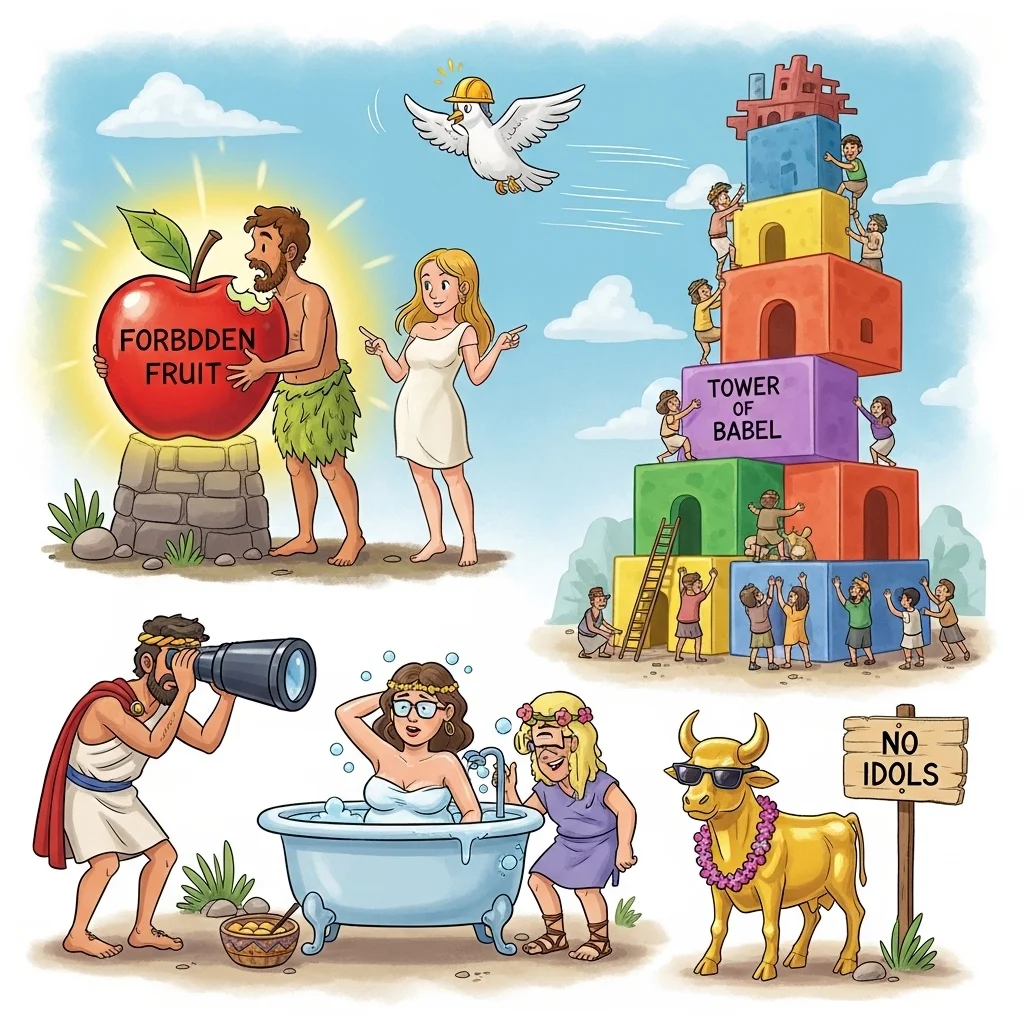
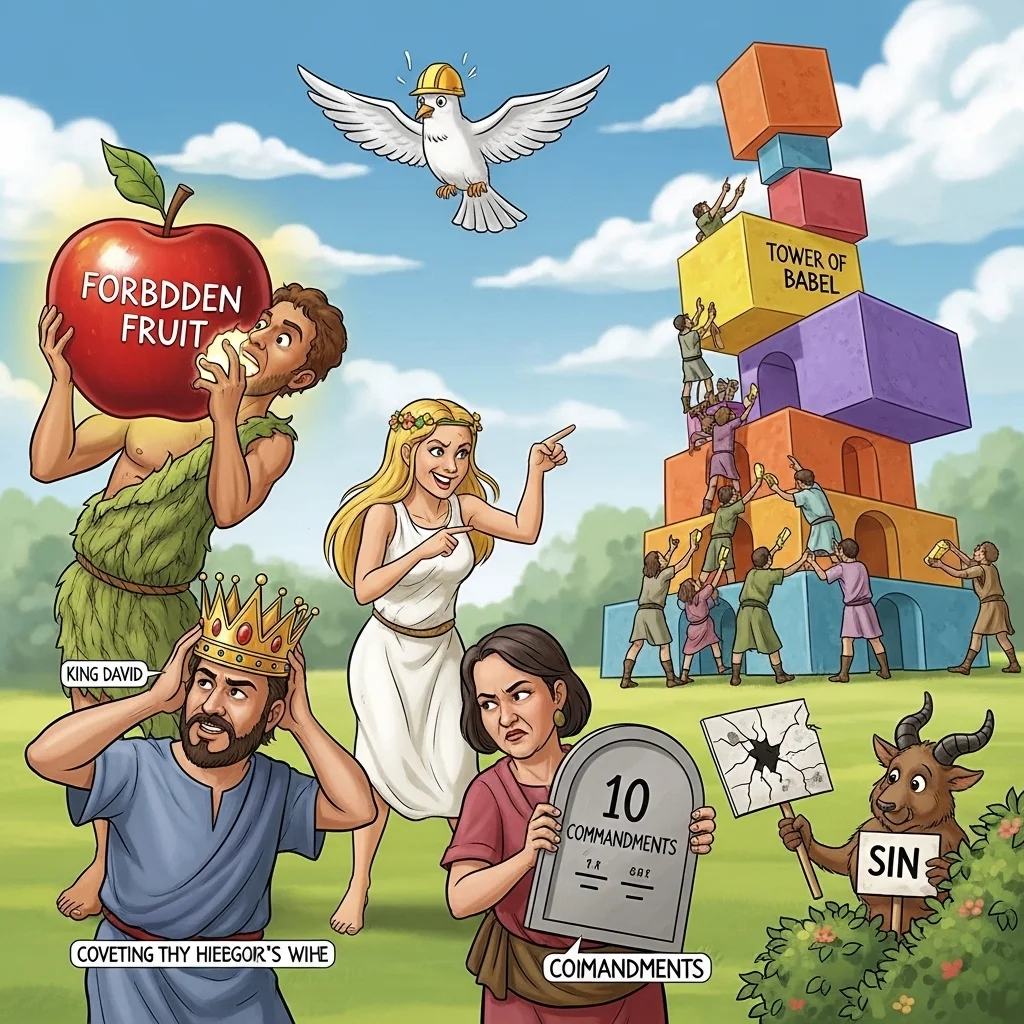
1. Adam and Eve – Crossing the Forbidden Line
In the book of Genesis, God clearly commanded Adam not to eat from the tree of the knowledge of good and evil.
The command was explicit.
When Eve and then Adam ate from it, it wasn’t ignorance—it was a transgression.
They crossed a boundary they knew existed.
This act introduced separation from God and altered humanity’s spiritual condition.
2. King David – Rebellion with Awareness
In 2 Samuel, King David committed adultery with Bathsheba and orchestrated Uriah’s death.
David knew God’s law.
He understood the covenant.
Yet he chose to step beyond it.
Later, in Psalm 51, David cries:
“Blot out my transgressions.”
Notice—he does not say merely “mistakes.” He calls it what it is: transgression.
A conscious rebellion.
3. Israel’s Rebellion Against God
The prophets repeatedly accuse Israel of transgression. In Isaiah, God describes His people as rebellious children.
They weren’t unaware.
They weren’t confused.
They chose idols over the living God.
That is transgression.
Symbolism Behind Transgression
The transgression meaning in Bible carries powerful symbolic imagery.
1. A Broken Covenant
Biblically, covenant is sacred. Transgression symbolizes breaking a relational bond with God.
It’s not merely legal—it’s relational.
2. Crossing a Sacred Boundary
Imagine a king marking a royal garden with signs: “Do not enter.”
Entering anyway is not accidental wandering. It’s defiance.
Transgression represents crossing holy boundaries established by divine authority.
3. Spiritual Rebellion
Transgression often parallels rebellion against a king. It’s not just rule-breaking—it’s rejecting rulership.
Cultural Context of Transgression in Biblical Times
In ancient Israel:
Law was covenantal.
Breaking law meant dishonoring God’s authority.
Rebellion was considered treason.
Transgression carried severe consequences because it attacked social and spiritual order.
In covenant cultures, loyalty mattered more than legality.
Thus, the transgression meaning in Bible is deeply tied to loyalty and faithfulness.
Psychological Angle: Why Humans Transgress
Let’s go deeper.
Why do people knowingly cross boundaries?
Psychology offers insight:
Desire for autonomy – “I want to decide for myself.”
Temptation of forbidden things – The “don’t” becomes attractive.
Pride – Believing one knows better than authority.
Emotional impulse – Acting before thinking.
The Bible recognizes this inner battle.
In Romans 7, the Apostle Paul describes the tension between knowing what is right and doing what is wrong.
Transgression often begins internally before it becomes external.
Spiritual Angle: The Consequences of Transgression
The spiritual consequences are serious.
1. Separation from God
Isaiah declares:
“Your transgressions have separated you from your God.”
Separation—not because God moved away—but because rebellion disrupts relationship.
2. Spiritual Hardening
Repeated transgression dulls sensitivity to conviction.
The heart becomes resistant.
3. Need for Atonement
Under Mosaic law, transgressions required sacrifice.
In Christian theology, ultimate atonement is found in Jesus Christ.
Christian belief holds that Christ bore humanity’s transgressions to restore relationship with God.
Case Study: Personal Transformation Through Understanding Transgression
Consider a modern believer named Ahmed (hypothetical example).
Ahmed believed sin was only “big crimes.” But after studying the transgression meaning in Bible, he realized:
Ignoring God’s guidance deliberately is transgression.
Delayed obedience is still rebellion.
Intent matters.
This understanding shifted his prayer life.
Instead of vague apologies, he confessed specific acts of crossing boundaries.
The result?
Deeper humility.
Stronger spiritual discipline.
Clearer moral awareness.
How the New Testament Addresses Transgression
The New Testament doesn’t ignore transgression—it redefines the solution.
In Hebrews, Christ is presented as mediator of a new covenant.
Instead of repeated sacrifices, redemption is offered through grace.
This does not minimize transgression.
It magnifies mercy.
Practical Advice: How to Avoid Transgression Today
Understanding the transgression meaning in Bible should change how we live.
Here are practical steps:
1. Know God’s Boundaries
You can’t avoid crossing a line if you don’t know where it is.
Study Scripture consistently.
2. Practice Self-Examination
Ask:
Am I knowingly ignoring conviction?
Am I rationalizing rebellion?
3. Respond Quickly to Conviction
Delayed repentance often leads to hardened resistance.
4. Build Accountability
Community reduces isolation—and isolation increases risk.
5. Pray for Humility
Pride is the root of many transgressions.
Common Misunderstandings About Transgression
Myth 1: All Sin Is the Same
While all sin separates from God, Scripture distinguishes intent and severity.
Transgression carries the element of rebellion.
Myth 2: Transgression Is Unforgivable
Biblically, repentance opens the door to forgiveness.
David was restored. Peter was restored.
Myth 3: Ignorance Equals Transgression
Transgression involves awareness. Ignorant sin is treated differently in Mosaic law.
