

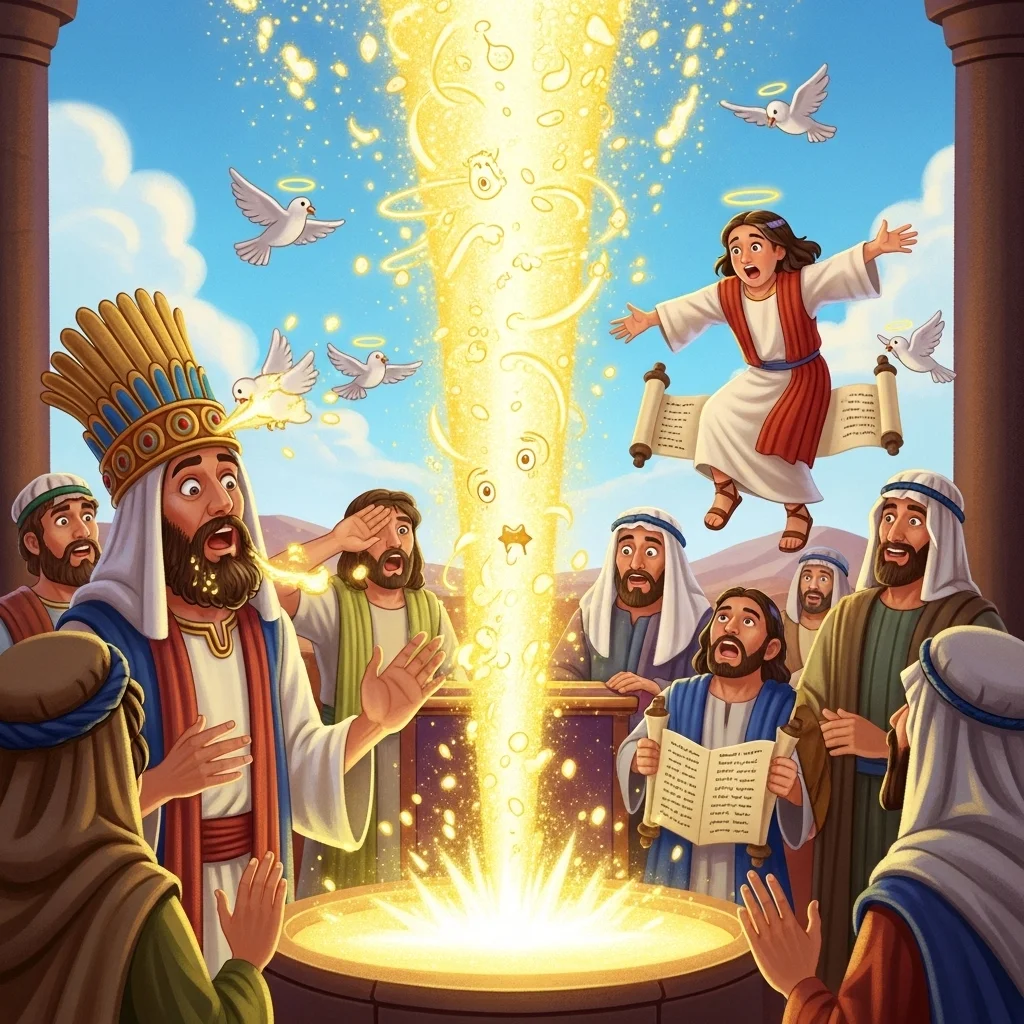
Shekinah Glory Meaning
The term Shekinah Glory refers to the visible or tangible manifestation of God’s presence among His people. Although the word “Shekinah” does not appear in the Bible, it comes from later Jewish tradition and is derived from a Hebrew root meaning “to dwell” or “to reside.” Christians often use the phrase “Shekinah Glory” to describe God’s glorious presence as seen in events such as the cloud that filled the Tabernacle and the Temple.
Several Bible passages describe God’s glorious presence, even though they never use the word “Shekinah.”
Exodus 40:34–35 (KJV) says:
“Then a cloud covered the tent of the congregation, and the glory of the LORD filled the tabernacle.”
Another example is 2 Chronicles 7:1–2 (KJV), where God’s glory filled Solomon’s Temple, preventing the priests from entering.
Therefore, while “Shekinah Glory” is not a biblical phrase, it is a theological expression used to describe the glorious presence of God revealed throughout Scripture.
Shekinah Meaning in Hebrew
The word Shekinah comes from the Hebrew root שָׁכַן (shakan), which means “to dwell,” “to settle,” or “to live among.” The noun Shekinah (שכינה) developed in later Jewish writings to describe God’s dwelling presence with His people.
Although the word itself is absent from the Hebrew Bible, the idea is deeply biblical. God repeatedly promised to dwell among Israel.
For example, Exodus 25:8 (KJV) says:
“And let them make me a sanctuary; that I may dwell among them.”
The Hebrew verb translated “dwell” is derived from shakan, the same root from which “Shekinah” comes. Thus, the biblical concept of God’s dwelling presence is present even though the specific term “Shekinah” is not.
Shekinah Glory Bible Verse (KJV)
There is no Bible verse in the King James Version (KJV) that contains the words “Shekinah Glory.” The term is a later theological expression rather than a biblical phrase.
However, many KJV passages describe God’s glorious presence, including:
- Exodus 40:34–35 – God’s glory fills the Tabernacle.
- 1 Kings 8:10–11 – The cloud fills Solomon’s Temple.
- 2 Chronicles 7:1–2 – Fire comes from heaven and God’s glory fills the Temple.
- Ezekiel 10:18–19 – God’s glory departs from the Temple.
- Luke 2:9 – The glory of the Lord shines around the shepherds.
- Revelation 21:23 – God’s glory illuminates the New Jerusalem.
These passages illustrate what many Christians refer to as the “Shekinah Glory” of God.
Is Shekinah Glory Biblical?
The answer depends on what is meant by the phrase.
The term “Shekinah Glory” is not found in the Bible, so in that sense it is not a biblical expression. It originated in Jewish rabbinic literature after the Old Testament period.
However, the concept behind the phrase is biblical. Scripture repeatedly teaches that God’s glorious presence dwelt with His people in the Tabernacle, the Temple, and ultimately through Jesus Christ.
For example, John 1:14 (KJV) declares:
“And the Word was made flesh, and dwelt among us, (and we beheld his glory…)”
The word translated “dwelt” literally means “pitched His tent” or “tabernacled,” echoing God’s dwelling among Israel.
Therefore, many Christian teachers use “Shekinah Glory” as a helpful theological term while recognizing that it is not a word used in Scripture itself.
Shekinah Meaning in Arabic
There is no original Arabic word “Shekinah” because the term comes from Hebrew. When written in Arabic, it is usually transliterated as شكينة (Shakīnah or Shekinah).
The Hebrew word Shekinah means God’s dwelling presence. It should not be confused with the Arabic word سكينة (Sakīnah), which means tranquility, peace, or calmness. Although the two words share a similar Semitic root and sound alike, they belong to different languages and have distinct meanings.
When discussing the Bible, “Shekinah” refers specifically to the theological idea of God’s dwelling presence rather than to the Arabic word sakīnah.
Shekinah Pronunciation
Shekinah is commonly pronounced:
sheh-KY-nuh
The emphasis falls on the second syllable (“KY”). You may also hear slight variations depending on regional accents, but this pronunciation is widely accepted among English-speaking Christians and Bible teachers.
Shekinah Meaning in Greek
The word Shekinah does not come from Greek. It is a Hebrew-derived term based on the root shakan, meaning “to dwell.”
In the Greek New Testament, similar ideas are expressed using different words. For example:
- δόξα (doxa) means glory.
- σκηνόω (skēnoō) means to dwell or tabernacle.
In John 1:14 (KJV), the Greek verb translated “dwelt” is skēnoō, emphasizing that Jesus lived among humanity and revealed God’s glory.
Although there is no Greek word “Shekinah,” the New Testament clearly teaches the reality of God’s presence dwelling with His people through Christ.
Shekinah Name Meaning in Islam
The name Shekinah is not mentioned in the Quran and is not an Arabic or traditionally Islamic name. It originates from Hebrew and is associated with the idea of God’s dwelling presence in Jewish tradition.
Because naming customs vary across Muslim communities, whether the name is considered appropriate is a matter of personal preference and guidance from knowledgeable Islamic scholars. From a linguistic perspective, Shekinah is a Hebrew name rather than an Islamic one.
From a biblical perspective, the name is connected with the concept of God’s presence dwelling among His people, but it should not be described as an Islamic term.
What Does Shekinah Mean?
The Shekinah meaning in Bible comes from the Hebrew root word “shakan”, meaning “to dwell” or “to settle.”
Shekinah refers to the dwelling presence of God, especially when His glory becomes visible or tangible.
Although the term Shekinah developed later in Jewish writings like the Talmud and Midrash, the concept is deeply biblical.
Here’s a quick breakdown:
| Term | Meaning |
|---|---|
| Hebrew Root | Shakan (to dwell) |
| Core Idea | God’s dwelling presence |
| Biblical Expression | Glory, cloud, fire, light |
| Spiritual Focus | God manifesting among His people |
The Shekinah meaning in Bible centers on one powerful truth:
God is not distant. He chooses to dwell among His people.
Biblical Foundation of Shekinah Meaning in Bible
Even though the term “Shekinah” is not written directly in Scripture, the idea appears repeatedly.
1. The Burning Bush – Divine Presence Revealed
In the book of Exodus, Moses encounters a bush that burns but is not consumed.
This supernatural fire symbolized the Shekinah glory of God—holy, radiant, and powerful.
God wasn’t merely speaking from heaven. He was manifesting His presence on earth.
2. The Pillar of Cloud and Fire
During Israel’s wilderness journey, God led them by:
A cloud by day
A pillar of fire by night
This visible manifestation represents the Shekinah meaning in Bible—God dwelling with and guiding His people.
3. The Tabernacle Filled with Glory
When the Tabernacle was completed, Scripture says the cloud covered it and the glory of the Lord filled it.
Moses could not even enter because of the overwhelming presence of God.
This wasn’t symbolic language. It described a real manifestation of divine glory—Shekinah in action.
4. Solomon’s Temple
When King Solomon dedicated the temple, the glory of the Lord filled the house so powerfully that priests could not stand to minister.
The Shekinah meaning in Bible here shows:
God approves holy worship
God inhabits sacred spaces
God reveals Himself where He is honored
5. Jesus and the New Covenant
The ultimate fulfillment of the Shekinah meaning in Bible is found in John 1:14:
“The Word became flesh and dwelt among us.”
The Greek word used for “dwelt” means “to tabernacle.”
Jesus Himself became the living Shekinah—the visible glory of God walking among humanity.
Symbolism Behind Shekinah Meaning in Bible
The Shekinah meaning in Bible is rich in imagery and symbolism.
1. Light
God’s glory often appears as radiant light. Light represents:
Holiness
Truth
Revelation
Purity
Just as darkness disappears when light enters a room, sin cannot remain where Shekinah glory dwells.
2. Fire
Fire symbolizes:
Purification
Judgment
Passion
Fire refines gold. Similarly, the Shekinah meaning in Bible includes God refining His people.
3. Cloud
The cloud represents:
Mystery
Protection
Guidance
Divine covering
It both revealed and concealed God’s glory, reminding us that God is near yet infinitely beyond full human understanding.
Case Study: The Temple and National Revival
When Solomon completed the temple, Israel experienced spiritual unity and revival.
Let’s analyze what happened:
| Event | Result |
|---|---|
| Temple built | National obedience |
| Sacrifice offered | Divine approval |
| Glory filled temple | Worship intensified |
| People witnessed presence | Faith strengthened |
The Shekinah meaning in Bible in this moment wasn’t just mystical—it transformed a nation.
When people experience the presence of God, behavior changes.
Cultural Understanding of Shekinah
In Jewish tradition, especially rabbinic writings, Shekinah represents:
God dwelling in the Temple
God resting upon the faithful
God’s presence during prayer and Torah study
After the Temple’s destruction, Jewish scholars taught that the Shekinah went into exile with Israel—meaning God remained with His people even in suffering.
This reveals something beautiful:
The Shekinah meaning in Bible includes companionship in hardship.
Psychological Angle: Why the Concept of Shekinah Matters
Humans long for presence.
We fear isolation more than difficulty. The Shekinah meaning in Bible answers one of humanity’s deepest needs:
You are not alone.
Psychologically, belief in God’s dwelling presence:
Reduces anxiety
Increases hope
Encourages moral accountability
Strengthens resilience
Just as a child feels safer when a parent is nearby, believers gain confidence knowing God’s glory surrounds them.
Spiritual Angle: Shekinah and Holiness
The Shekinah meaning in Bible is closely tied to holiness.
When Isaiah encountered God’s glory, he cried out, “Woe is me!”
When Peter encountered Jesus’ divine power, he said, “Depart from me, for I am a sinful man.”
God’s presence reveals both:
His purity
Our need for transformation
But Shekinah is not meant to destroy—it purifies and restores.
Shekinah Meaning in Bible vs. Omnipresence
It’s important to distinguish between two truths:
| Concept | Meaning |
|---|---|
| Omnipresence | God is everywhere |
| Shekinah | God manifesting His glory visibly |
God is always present, but Shekinah refers to intensified, revealed presence.
Think of it this way:
Electricity flows through wires constantly. But when a light bulb turns on, the energy becomes visible.
Shekinah is the light turning on.
Shekinah in Christian Theology
Many Christian theologians connect the Shekinah meaning in Bible to:
The incarnation of Christ
The indwelling of the Holy Spirit
The presence of God in worship
When believers gather and sense a powerful spiritual atmosphere, some describe it as experiencing Shekinah glory.
While the term isn’t used explicitly in the New Testament, the concept aligns with God dwelling within believers.
Practical Application: How Does Shekinah Meaning in Bible Affect You?
Understanding the Shekinah meaning in Bible isn’t just academic. It’s transformative.
Here’s how it applies:
1. Live with Awareness
Recognize that God dwells with you.
2. Pursue Holiness
God’s presence thrives where purity and obedience exist.
3. Value Worship
Throughout Scripture, Shekinah often appears in worship settings.
4. Trust in Hard Times
Just as the cloud guided Israel through wilderness, God guides today.
Modern Example: Personal Spiritual Renewal
Consider someone battling anxiety and confusion.
They begin dedicating time to prayer and reflection. Over weeks, they experience peace, clarity, and direction.
While not a visible cloud or fire, the Shekinah meaning in Bible reminds us that God still reveals His presence—sometimes quietly but powerfully.
