
The Origin of the Word Froward
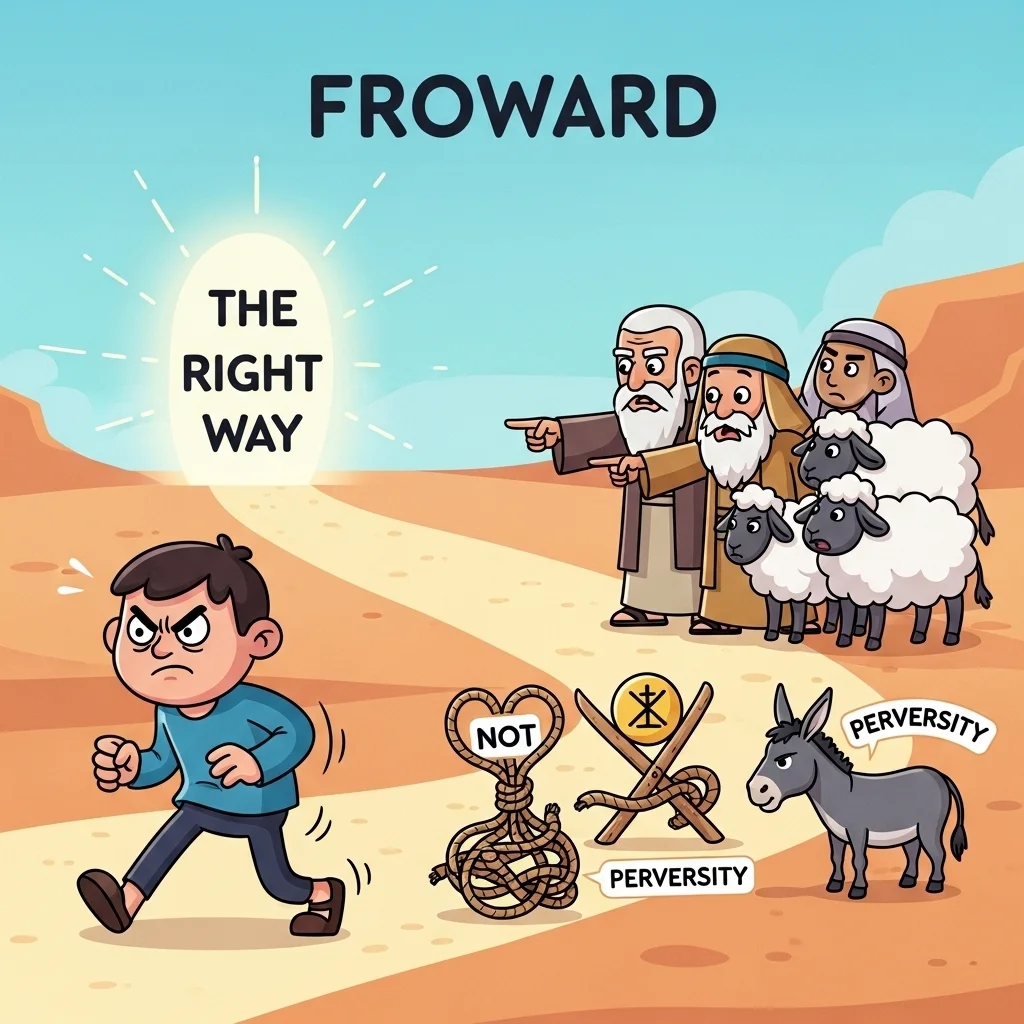
The word “froward” comes from Old English:
“From” (away)
“Weard” (toward)
Literally meaning:
“Turned away.”
That origin perfectly captures the spiritual meaning.
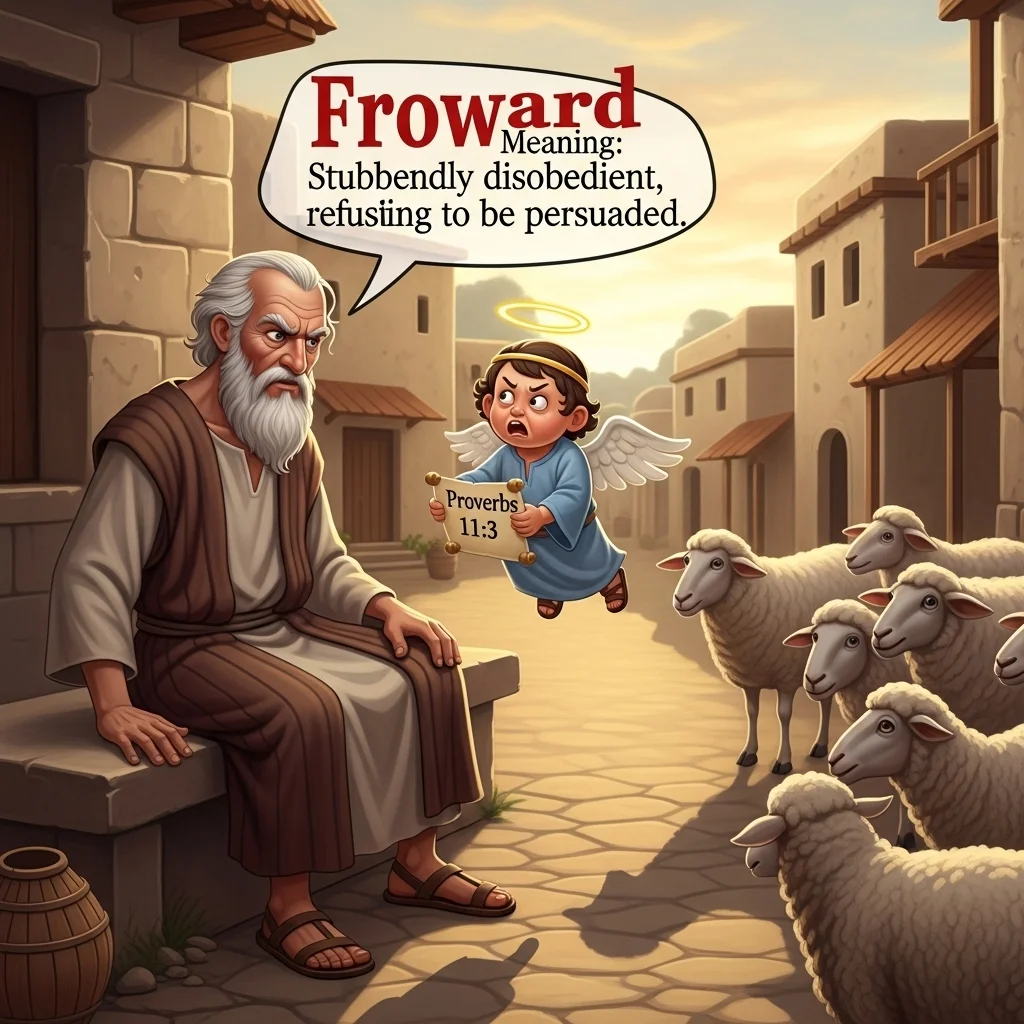
In biblical context, a froward person is someone who has turned away from righteousness.
Where Is Froward Used in the Bible?
The term appears multiple times in the Book of Proverbs, especially in the King James Version.
For example:
Proverbs 3:32
“For the froward is abomination to the Lord: but his secret is with the righteous.”
Proverbs 4:24
“Put away from thee a froward mouth, and perverse lips put far from thee.”
Proverbs 6:12
“A naughty person, a wicked man, walketh with a froward mouth.”
These verses show that the froward meaning in Bible relates to:
Moral crookedness
Rebellion
Twisted speech
Resistance to truth
Hebrew Meaning Behind Froward
In the Old Testament, “froward” often translates the Hebrew word:
“Iqqesh” (עִקֵּשׁ)
Which means:
Crooked
Twisted
Perverse
It describes someone who intentionally bends truth or behaves dishonestly.
Here’s a helpful breakdown:
| Hebrew Root | Literal Meaning | Spiritual Meaning |
|---|---|---|
| Iqqesh | Twisted | Morally distorted |
| Froward | Contrary | Spiritually rebellious |
| Perverse | Crooked | Rejecting righteousness |
So the froward meaning in Bible is not just about stubbornness — it is about intentional moral distortion.
Spiritual Symbolism of Froward in Scripture
The Bible frequently contrasts two types of people:
The righteous
The froward
The righteous are:
Humble
Teachable
Honest
The froward are:
Proud
Resistant
Deceptive
The symbolism is powerful.
A straight path represents obedience.
A crooked path represents rebellion.
This imagery appears throughout Scripture.
Psychological Angle: What Makes a Person Froward?
From a psychological standpoint, froward behavior reflects:
Defensiveness
Ego-driven thinking
Refusal to accept correction
Habitual contradiction
A froward person does not simply make mistakes.
They resist truth even when confronted with it.
The Bible repeatedly warns against this heart condition because it hardens over time.
Case Study: Pharaoh as an Example of Frowardness
Although the word “froward” is not directly used for him, Pharaoh in the book of Exodus demonstrates the behavior.
Despite witnessing miracles, he hardened his heart.
His stubborn refusal to obey God illustrates the spiritual principle behind the froward meaning in Bible:
Clear evidence
Repeated warning
Persistent resistance
That pattern leads to destruction.
Cultural Context: Why Older Translations Use “Froward”
Modern Bible translations rarely use the word anymore.
Instead, they translate it as:
Perverse
Corrupt
Crooked
Deceitful
For example:
Proverbs 3:32 in modern translations replaces “froward” with “devious” or “perverse.”
But the older word “froward” carries a vivid emotional tone — it suggests deliberate opposition.
Biblical Contrast: Froward vs Upright
Here’s a comparison table to make it clear:
| Froward Person | Upright Person |
|---|---|
| Twists truth | Speaks honestly |
| Resists correction | Accepts guidance |
| Proud | Humble |
| Walks in crooked paths | Walks in straight paths |
| Divides relationships | Builds peace |
The froward meaning in Bible highlights a dangerous spiritual posture — not just behavior, but heart attitude.
Spiritual Warning: Why God Opposes the Froward
Proverbs 3:32 says the froward person is an “abomination” to the Lord.
That’s strong language.
Why?
Because frowardness:
Distorts truth
Damages relationships
Rejects divine wisdom
Encourages rebellion
It reflects a heart unwilling to align with God.
Scripture teaches that humility attracts grace — but stubborn perverseness invites correction.
Practical Advice: How to Avoid a Froward Heart
The Bible doesn’t just warn — it guides.
Here are practical steps:
1. Practice Humility
Admit when you are wrong.
2. Accept Correction
Proverbs repeatedly praises teachability.
3. Guard Your Speech
Many verses connect frowardness to twisted speech.
4. Seek Wisdom
Prayer and Scripture study soften the heart.
5. Examine Motives
Ask yourself: Am I resisting truth out of pride?
The opposite of frowardness is humility.
