
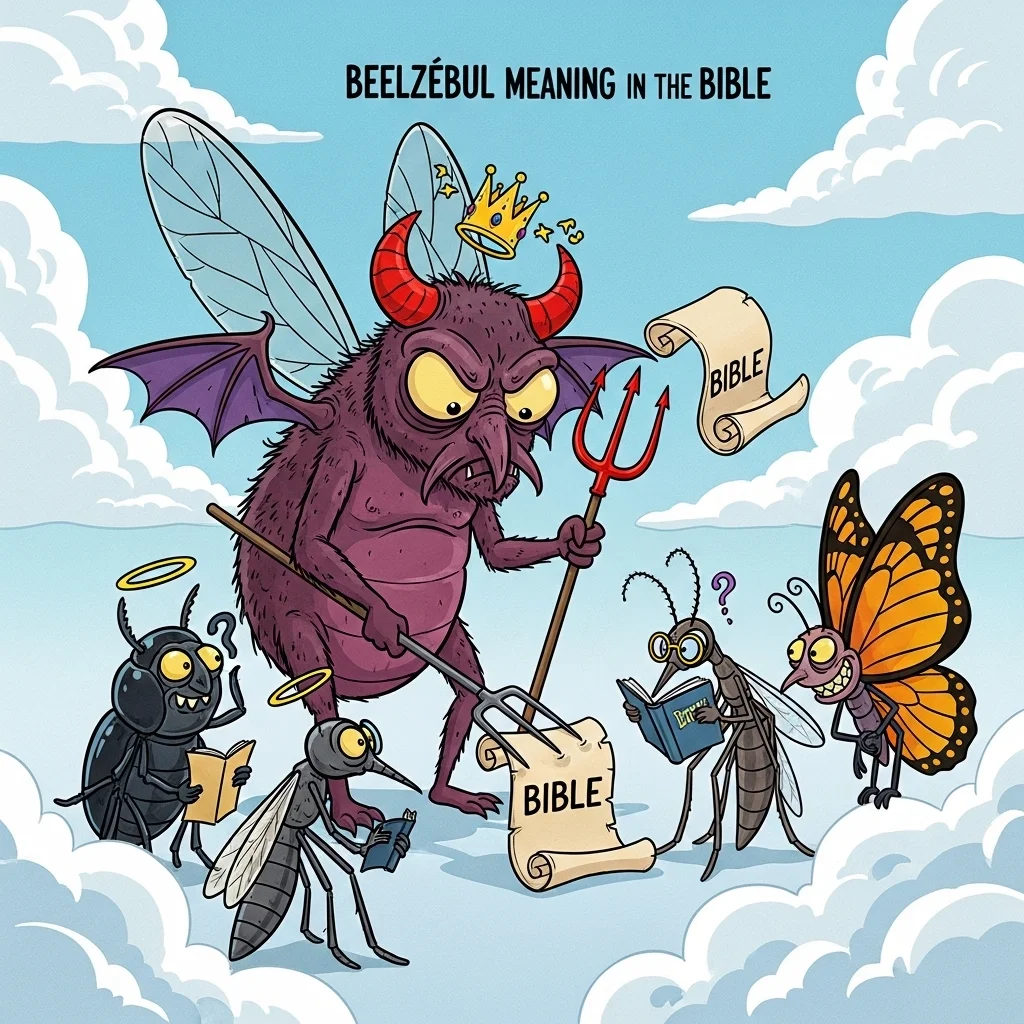

The Origin of Beelzebul
The name Beelzebul has Hebrew origins, derived from two elements:
- Baal: Meaning “lord” or “master,” often referring to ancient pagan deities.
- Zebul: Meaning “house,” “high place,” or “exalted dwelling.”
Combined, Beelzebul is sometimes interpreted as “Lord of the Flies”, “Prince of Demons,” or “Exalted Lord,” depending on the historical and linguistic context.
Key Points:
- Origin: Hebrew, combining Baal (lord) and Zebul (dwelling/exalted).
- Meaning: Lord of the flies, prince of demons, or exalted lord.
- Biblical Context: Associated with demonic possession and opposition to God’s work (Matthew 12:24).
| Name | Origin | Meaning | Biblical Reference | Symbolism |
|---|---|---|---|---|
| Beelzebul | Hebrew | Lord of flies / Prince of demons | Matthew 12:24 | Evil, spiritual opposition, demonic power |
Biblical References to Beelzebul
Beelzebul appears in the New Testament primarily as a demonic figure:
- Accusation Against Jesus: Pharisees accused Jesus of casting out demons by the power of Beelzebul (Matthew 12:24).
- Symbol of Evil: Beelzebul represents the spiritual opposition to God’s work and divine authority.
- Spiritual Warfare: The name illustrates the reality of spiritual conflict and the power of God over evil forces (Mark 3:22-30).
In the Bible, Beelzebul is a symbol of rebellion, temptation, and the influence of darkness, highlighting the importance of discernment and faith in God.
Spiritual Symbolism of Beelzebul
Beelzebul carries profound spiritual symbolism:
- Personification of Evil: Represents the forces that oppose God’s will and deceive humanity.
- Temptation and Testing: Serves as a reminder of spiritual challenges and moral testing.
- Divine Victory: Despite its fearsome representation, biblical accounts emphasize that God’s power is greater than Beelzebul’s influence (Luke 11:20).
Spiritually, Beelzebul teaches believers about vigilance, resisting temptation, and relying on God’s authority.
Cultural and Historical Significance
Beelzebul also has a rich cultural and historical background:
- Ancient Pagan Origins: Initially, Beelzebul may have been a Canaanite deity worshiped in high places.
- Jewish Tradition: Later Jewish texts equated Beelzebul with a leader of demonic forces.
- Christian Literature: Over time, Beelzebul became synonymous with Satan or a high-ranking demon in Christian theology.
Culturally, the name has inspired literature, art, and theology, often as a symbol of ultimate evil or moral warning.
Psychological and Symbolic Angle
Psychologically, Beelzebul can represent:
- Inner Struggles: Temptations, destructive habits, or negative influences in personal life.
- Shadow Self: Facing inner darkness to achieve spiritual growth and moral clarity.
- Warning Sign: Awareness of evil forces encourages vigilance, prayer, and ethical living.
Understanding Beelzebul allows believers to navigate spiritual challenges with wisdom and faith.
Case Study: Lessons from Beelzebul in Life
Consider a community facing moral and spiritual challenges:
- Leaders use the story of Beelzebul to teach discernment, resisting temptation, and promoting ethical behavior.
- Spiritual guidance emphasizes God’s authority over evil, reinforcing faith and moral courage.
- Individuals learn to recognize harmful influences, symbolically represented by Beelzebul, and make conscious choices aligned with faith.
This illustrates how biblical names and stories can shape spiritual awareness and practical living.
Practical Advice: Applying the Beelzebul Meaning in Bible
- Spiritual Vigilance: Recognize and resist negative influences in your life.
- Faith in God’s Authority: Remember that divine power triumphs over evil forces.
- Education and Awareness: Use biblical teachings about Beelzebul to guide moral and spiritual decisions.
Tips:
- Study spiritual warfare passages to understand God’s victory over evil.
- Reflect on personal temptations and how to overcome them through prayer and wisdom.
- Teach children about good versus evil using age-appropriate explanations of biblical symbolism.