
The Origin of Babylon in Scripture
Babylon’s roots go back to the very beginning of civilization.
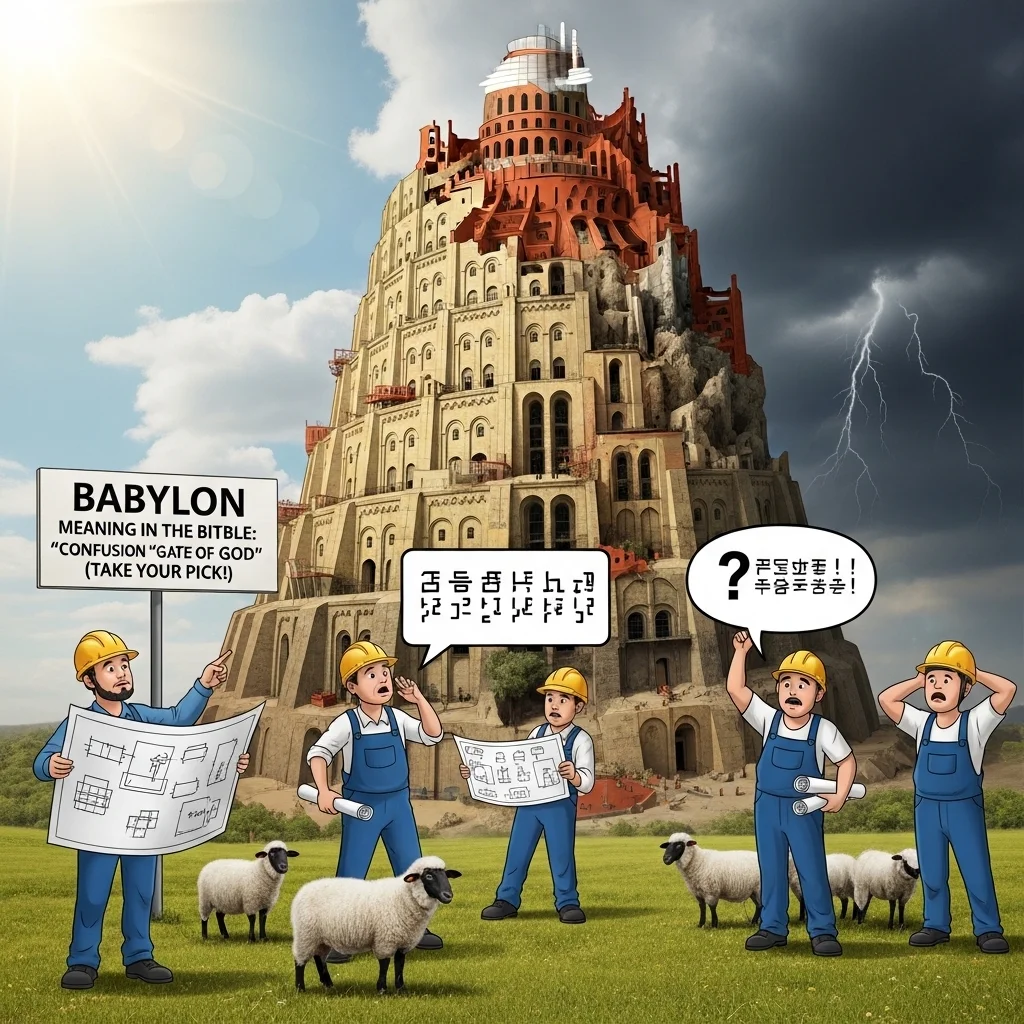
It is connected to the Tower of Babel in the **Book of Genesis 11.
In that passage, humanity tried to build a tower reaching heaven to “make a name” for themselves.
God confused their language and scattered them.
The name “Babel” is linked to confusion.
Later, Babel became Babylon — a powerful city in Mesopotamia (modern-day Iraq).
So the Babylon meaning in Bible begins with:
Human pride and rebellion against God.
Historical Babylon: The Empire of Power
Babylon rose to prominence under rulers like Nebuchadnezzar II.
Under his leadership, Babylon became:
Architecturally magnificent
Militarily dominant
Economically powerful
Most importantly, Babylon conquered Jerusalem and destroyed Solomon’s Temple around 586 BC.
The people of Judah were taken into exile.
This event deeply shaped Jewish history.
Babylon in the Book of Daniel
The Book of Daniel provides powerful insight into Babylon’s spiritual symbolism.
Daniel and his friends were taken captive to Babylon.
There we see:
Pressure to conform
Temptation to compromise
Testing of faith
God’s sovereignty over empires
Nebuchadnezzar’s pride becomes a key lesson.
In Daniel 4, he boasts about his achievements.
God humbles him dramatically.
This reinforces a major theme behind the Babylon meaning in Bible:
Pride leads to downfall.
Spiritual Symbolism of Babylon
As Scripture progresses, Babylon becomes more symbolic than geographical.
Let’s break down its spiritual meaning:
| Symbol | Meaning | Biblical Theme |
|---|---|---|
| Pride | Self-exaltation | Tower of Babel |
| Idolatry | False worship | Daniel 3 |
| Oppression | Exile of Judah | 2 Kings 25 |
| Worldliness | Moral corruption | Revelation 17–18 |
Babylon represents a system that opposes God.
It symbolizes human civilization built on pride rather than obedience.
Babylon in the New Testament
Babylon appears again in the Book of Revelation.
But this time, it is symbolic.
Revelation 17–18 describes:
“Babylon the Great”
A corrupt spiritual system
Economic power
Moral decay
This Babylon is not just a city.
It represents:
Global rebellion
Materialism
Spiritual deception
In Revelation, Babylon ultimately falls — showing that no empire stands against God forever.
Cultural Meaning of Babylon
Historically, Babylon was known for:
The Hanging Gardens (one of the ancient wonders)
Wealth and luxury
Advanced architecture
Astronomical knowledge
But culturally, Babylon became associated with:
Excess
Corruption
Moral decline
Even today, the word “Babylon” is sometimes used to describe:
Corrupt systems
Oppressive governments
Societies driven by greed
That cultural impact flows directly from its biblical portrayal.
Psychological Angle: What Babylon Represents in the Human Heart
Babylon is not only external.
It can also represent an internal condition.
Spiritually speaking, “Babylon” can symbolize:
Ego
Self-reliance without God
Desire for recognition
Moral compromise
The Tower of Babel story shows humanity wanting independence from divine authority.
That same impulse exists today.
So the Babylon meaning in Bible is both historical and personal.
Case Study: Daniel’s Faith in Babylon
Daniel serves as a model for believers living in a “Babylon” culture.
He:
Refused to defile himself
Prayed consistently
Interpreted dreams faithfully
Trusted God under pressure
His story teaches us that:
You can live in Babylon without becoming Babylon.
That is one of the most practical lessons in Scripture.
Comparison: Jerusalem vs Babylon
The Bible often contrasts two cities:
| Jerusalem | Babylon |
|---|---|
| City of God | City of man |
| Worship | Idolatry |
| Humility | Pride |
| Obedience | Rebellion |
| Eternal promise | Temporary power |
In Revelation, the New Jerusalem replaces Babylon.
This shows the final victory of God’s kingdom over worldly systems.
Spiritual Lessons from Babylon
The Babylon meaning in Bible teaches several powerful lessons:
1. Pride Is Dangerous
Every Babylon story begins with human arrogance.
2. God Is Sovereign Over Nations
Empires rise and fall under His authority.
3. Compromise Leads to Corruption
Babylon tempted Israel to adopt its values.
4. Faith Can Survive in Hostile Culture
Daniel proves that righteousness can thrive even in exile.
Practical Application for Today
How does Babylon apply to modern life?
Examine Cultural Influence
Are we adopting values that oppose God?
Guard Against Pride
Success without humility mirrors Babylon.
Stand Firm in Faith
Like Daniel, believers can remain faithful in secular environments.
Remember Temporary Power
World systems are temporary — God’s kingdom is eternal.
