
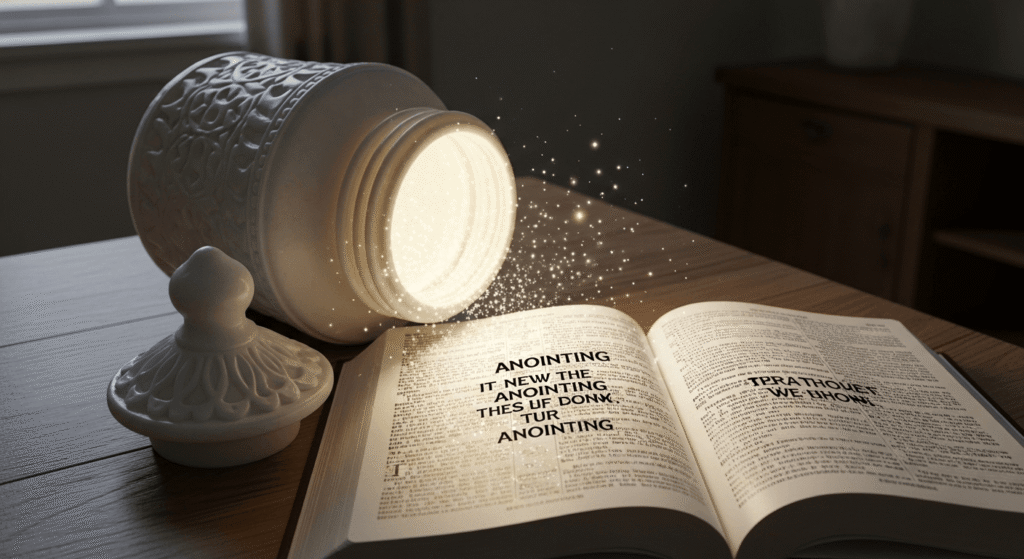

The alabaster meaning in Bible goes far beyond a simple stone or container. In Scripture, alabaster represents purity, sacrifice, devotion, and extravagant worship. Whenever alabaster appears—especially in the New Testament—it marks moments of deep spiritual importance.
One of the most unforgettable biblical scenes involves a woman breaking an alabaster jar of perfume to honor Jesus. This single act changed how believers understand worship, value, and surrender. The Bible uses alabaster not casually, but intentionally, as a symbol of something precious, costly, and deeply meaningful.

Alabaster Box Spiritual Meaning
The spiritual meaning of the alabaster box centers on wholehearted worship, sacrificial love, humility, and complete devotion to God. In biblical times, an alabaster box often contained expensive perfume that represented something precious and valuable. When the woman poured the perfume on Jesus, she demonstrated that He was worthy of her greatest treasure.
Spiritually, the alabaster box reminds believers to surrender their hearts, talents, resources, and lives to Christ without holding anything back. It also symbolizes repentance, gratitude for God’s forgiveness, and a willingness to honor Jesus regardless of what others may think.
Key Bible Verses:
- Mark 14:3-9 – The woman anoints Jesus with costly perfume.
- Matthew 26:6-13 – Jesus praises her act of devotion.
- John 12:1-8 – Mary anoints Jesus’ feet with expensive perfume.
Alabaster Jar in the Bible
The alabaster jar mentioned in the Bible was a small container made from alabaster, a smooth stone prized for its beauty. These jars commonly held expensive perfumes or fragrant oils and were often sealed to preserve their valuable contents.
The most well-known biblical accounts involve women who used an alabaster jar to anoint Jesus. Their actions expressed deep love, honor, repentance, and faith. Jesus commended these women because their outward act reflected sincere devotion and recognized His unique identity and mission.
The alabaster jar serves as a powerful reminder that God values genuine worship flowing from a devoted heart more than outward appearances.
Key Bible Passages:
- Luke 7:36-50
- Matthew 26:6-13
- Mark 14:3-9
- John 12:1-8
Who Broke the Alabaster Box in the Bible?
According to Mark 14:3, an unnamed woman broke the alabaster jar before pouring its expensive perfume on Jesus’ head while He was in Bethany.
Although the Gospel of Mark does not identify her by name, John 12:1-8 records a similar event and identifies the woman as Mary of Bethany, the sister of Martha and Lazarus. Some Bible scholars believe these accounts describe the same event, while others believe they recount separate occasions involving different women.
Breaking the jar symbolized giving everything to Jesus without reservation. Once the container was broken, the perfume was completely poured out, illustrating total surrender and wholehearted worship.
Bible Verse:
“While he was in Bethany… a woman came with an alabaster jar of very expensive perfume… She broke the jar and poured the perfume on his head.” — Mark 14:3
Alabaster Box Meaning
The alabaster box represents something valuable that is willingly offered to God. Because it contained costly perfume, it became a symbol of sacrifice, honor, love, and devotion.
In Christian teaching, the alabaster box often symbolizes:
- Giving God our very best.
- Worship that comes from a grateful heart.
- Repentance and spiritual transformation.
- Complete surrender to Jesus.
- Trusting God with what we treasure most.
The emphasis is not on the physical container itself but on the attitude of the person who offered its contents to Christ.
Supporting Scriptures:
- Mark 14:3-9
- Luke 7:36-50
- Romans 12:1
- Psalm 51:17
The Woman with the Alabaster Jar Commentary
The woman with the alabaster jar demonstrates remarkable faith, humility, and courage. She approached Jesus carrying expensive perfume and expressed her devotion by anointing Him, despite criticism from those around her.
In Luke 7, the woman is described as a sinner who wept at Jesus’ feet, wiped them with her hair, kissed them, and anointed them with perfume. Jesus explained that her great love reflected the forgiveness she had received.
Her actions teach several important biblical truths:
- Genuine repentance leads to transformed worship.
- God’s forgiveness produces deep gratitude.
- Jesus welcomes those who come to Him in faith.
- True worship may be misunderstood by others, but God sees the heart.
- Love for Christ is demonstrated through sacrificial obedience.
Jesus concluded by saying:
“Your faith has saved you; go in peace.” — Luke 7:50
Lessons from the Alabaster Box
The story of the alabaster box offers several timeless spiritual lessons for believers.
1. Give God Your Best
The perfume was extremely valuable, showing that Jesus deserves our highest honor and greatest devotion.
2. Worship Requires Sacrifice
True worship often involves giving something precious, whether it is our time, resources, comfort, or pride.
3. Repentance Leads to Grace
The woman in Luke 7 found forgiveness because she came to Jesus with sincere faith and humility.
4. Don’t Let Criticism Stop Your Faith
Others criticized the woman’s actions, but Jesus defended her because He valued her heart more than public opinion.
5. Jesus Sees the Heart
God looks beyond outward appearances and recognizes genuine faith and love.
Key Scriptures:
- Luke 7:36-50
- Mark 14:3-9
- 1 Samuel 16:7
- Hebrews 11:6
Let the Alabaster Break Meaning
The phrase “Let the alabaster break” is not a direct Bible verse, but it is inspired by the biblical story of the woman who broke her alabaster jar to pour perfume on Jesus.
Spiritually, the phrase encourages believers to let go of pride, fear, selfishness, and anything that prevents wholehearted devotion to Christ. Just as the perfume could only be fully released after the jar was broken, Christians often understand this image as illustrating that God can work powerfully through lives marked by humility, surrender, and obedience.
It reminds believers that true worship is not about preserving what is most valuable for ourselves but offering it to God in love and faith.
This idea reflects biblical principles found in:
- Mark 14:3-9
- Romans 12:1
- Galatians 2:20
Who Is the Woman with the Alabaster Jar in Luke 7?
The woman with the alabaster jar in Luke 7:36-50 is not identified by name. Luke simply describes her as “a woman in that town who lived a sinful life.”
She entered the house of Simon the Pharisee, where Jesus was dining, carrying an alabaster jar of perfume. She wept at Jesus’ feet, wiped them with her hair, kissed them, and anointed them with the perfume. Jesus used this moment to teach about forgiveness, love, and faith.
Some traditions have identified her with Mary Magdalene or Mary of Bethany, but the Bible does not make those identifications. Many biblical scholars therefore advise treating her as an unnamed woman whose story stands on its own.
Jesus concluded by declaring that her sins were forgiven because she came to Him in genuine faith.
Key Passage: Luke 7:36-50
“Therefore I tell you, her many sins have been forgiven—as her great love has shown. But whoever has been forgiven little loves little.” — Luke 7:47
This account highlights God’s mercy and the transforming power of sincere repentance and faith in Jesus Christ.
What Is Alabaster? A Biblical Overview
To fully understand the alabaster meaning in Bible, we must first understand what alabaster actually is.
Definition of Alabaster
Alabaster is a soft, fine-grained stone, usually white or translucent. In biblical times, it was used to make small jars or vessels, especially for expensive perfumes and oils.
Why Alabaster Was Valuable
Alabaster containers were valuable because:
They preserved fragrance for long periods
They were imported and rare
They symbolized wealth and honor
They were often sealed and broken only once
This makes alabaster a perfect biblical symbol for something meant to be given fully, not partially.
Alabaster Meaning in Bible: Core Symbolism
The alabaster meaning in Bible carries multiple layers of symbolism. Below is a clear breakdown:
| Symbol | Biblical Meaning |
|---|---|
| Purity | Clean heart and holy intentions |
| Sacrifice | Giving up something valuable |
| Worship | Deep reverence toward God |
| Devotion | Total surrender without reserve |
| Love | Selfless expression of faith |
Each of these meanings comes alive in biblical narratives involving alabaster.
Key Bible Story: The Alabaster Jar and Jesus
The most powerful explanation of the alabaster meaning in Bible is found in the Gospels.
Biblical Reference
Matthew 26:6–13
Mark 14:3–9
Luke 7:36–50
John 12:1–8
The Story in Brief
A woman enters a house where Jesus is dining. She carries an alabaster jar filled with expensive perfume. Without hesitation, she breaks the jar and pours the perfume on Jesus.
This act shocks everyone present.
Why Breaking the Alabaster Jar Matters
In biblical culture, an alabaster jar was sealed permanently. Once broken, it could never be reused.
👉 This means her action symbolized irreversible devotion.
She didn’t save some for later.
She didn’t measure the cost.
She gave everything at once.
This is a central pillar of the alabaster meaning in Bible.
Reactions to the Alabaster Act: A Lesson in Values
Human Reaction
Some disciples complained:
“Why this waste? This perfume could have been sold.”
This response reflects worldly thinking—measuring value by money.
Jesus’ Response
Jesus defended her:
“She has done a beautiful thing to me.”
Here, Jesus redefines value. According to Him, true worship outweighs material worth.
Spiritual Meaning of Alabaster in the Bible
From a spiritual lens, the alabaster meaning in Bible teaches believers about:
1. Total Surrender
Alabaster represents holding nothing back. True faith is not partial.
2. Costly Worship
Worship is meaningful when it costs us something—time, pride, comfort, or resources.
3. Brokenness Before God
The jar had to be broken for the fragrance to flow. Likewise, broken hearts release spiritual fragrance.
“A broken and contrite heart, O God, you will not despise.” (Psalm 51:17)
Psychological Angle: Why Alabaster Impacts the Human Heart
From a psychological perspective, the alabaster meaning in Bible connects deeply with human emotion.
Humans value symbolic actions
Sacrificial gestures create lasting memory
Breaking something valuable signals emotional commitment
The woman’s act communicated love more powerfully than words ever could.
Cultural Meaning of Alabaster in Biblical Times
Cultural Context
In ancient Middle Eastern culture:
Perfume symbolized honor
Anointing was linked to kingship and burial
Women rarely performed public acts like this
Her action broke social, cultural, and religious norms, making it even more powerful.
Alabaster and Burial Symbolism
Another layer of the alabaster meaning in Bible is its connection to death and burial.
Jesus Himself said:
“She did it to prepare me for burial.”
Alabaster thus symbolizes foreknowledge, faith, and spiritual insight.
Case Study: Modern-Day Alabaster Worship
Real-Life Example
A missionary sold personal possessions to fund a small church in a remote village. Critics called it irresponsible. Years later, that church became a lifeline for hundreds.
Like the alabaster jar, the sacrifice seemed excessive—until its impact was revealed.
Practical Lessons from the Alabaster Meaning in Bible
Here’s how believers can apply this meaning today:
Give God your best, not leftovers
Worship with intentional sacrifice
Stop calculating faith in terms of convenience
Allow brokenness to become spiritual fragrance
True devotion always leaves a mark.
Alabaster vs Other Biblical Materials
| Material | Meaning |
|---|---|
| Gold | Kingship, divinity |
| Frankincense | Prayer |
| Myrrh | Suffering, death |
| Alabaster | Sacrifice, devotion |
Frequently Asked Questions
1. What is the alabaster meaning in Bible?
Alabaster symbolizes purity, sacrifice, devotion, and extravagant worship.
2. Why was alabaster so valuable in biblical times?
Because it was rare, imported, and used to store costly perfumes.
3. Who broke the alabaster jar in the Bible?
A woman—often identified as Mary of Bethany.
4. Why did Jesus defend her action?
Because He valued her worship over material worth.
5. Is alabaster mentioned in the Old Testament?
Indirectly, through materials used for sacred purposes.
6. What does breaking the jar symbolize spiritually?
Total surrender and irreversible commitment to God.
7. How does alabaster relate to modern worship?
It teaches believers to give God their best, not convenience.
8. What lesson does alabaster teach about faith?
Faith is most powerful when it is costly and sincere.
Conclusion
The alabaster meaning in Bible is a timeless reminder that true worship costs something. It challenges believers to examine their faith: Is it convenient, or is it sacrificial?
Just like the broken jar released fragrance, a surrendered life releases spiritual impact. The story of alabaster calls us not to measure devotion by logic, but by love, obedience, and trust.
