
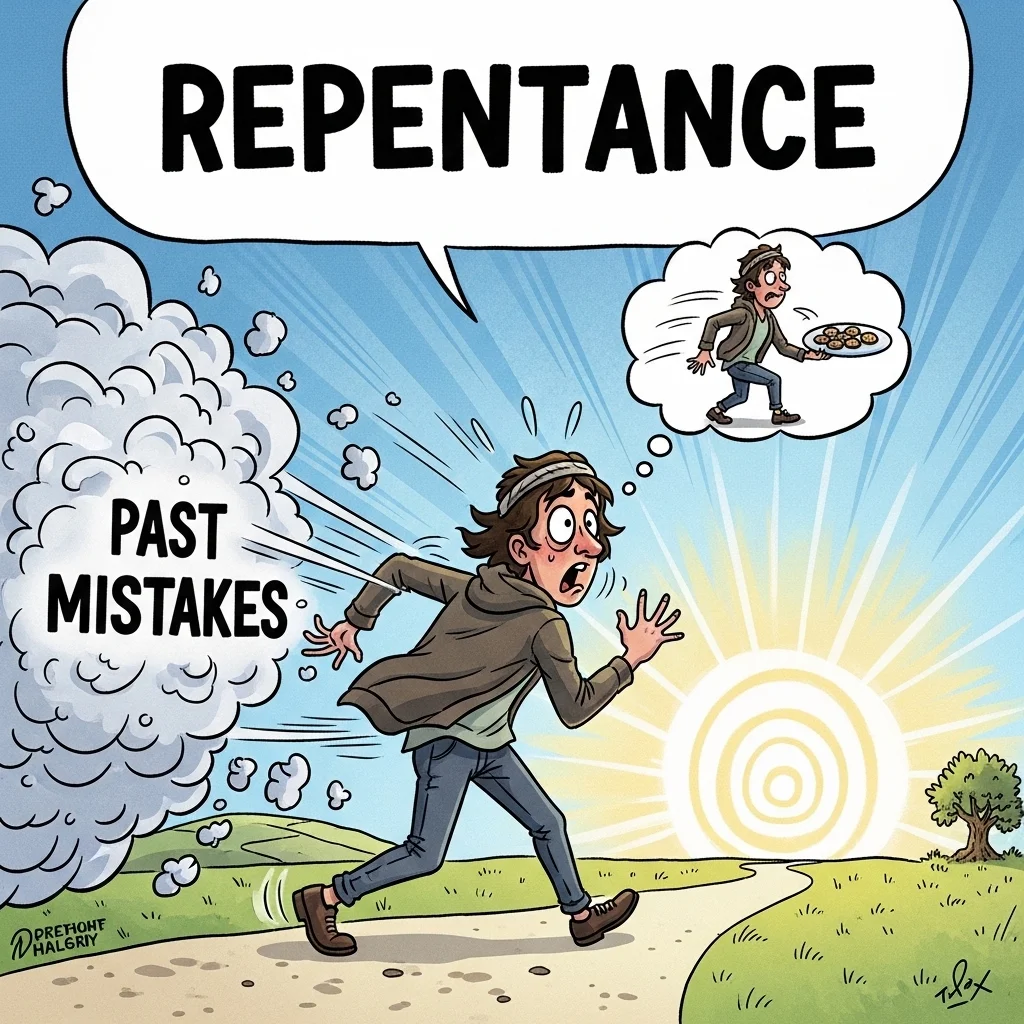

Detailed Explanation of Repent Meaning in Bible
What Does Repent Mean?
In simple terms:
Repent = To turn away from sin and turn back to God.
It is not only about saying:
“I’m sorry.”
It means:
Changing direction
Changing mindset
Changing behavior
Changing heart
Repentance involves action, not just emotion.
Greek & Hebrew Roots of Repentance
Understanding the original language gives deeper clarity.
| Language | Word | Meaning | Biblical Use |
|---|---|---|---|
| Greek | Metanoia | Change of mind, transformation | New Testament |
| Greek | Metamelomai | Regret, remorse | Emotional sorrow |
| Hebrew | Shuv | To return, turn back | Old Testament |
Key Insight:
Biblical repentance = Shuv + Metanoia
It means turning away from sin and returning to God with renewed thinking.
Repentance in the Old Testament
In the Old Testament, repentance often appears as:
👉 Turning away from idols
👉 Returning to covenant obedience
👉 Seeking forgiveness through sacrifice
Example: Israel’s Repentance
When Israel sinned:
Prophets called them to repent.
God warned them through judgment.
Restoration followed genuine repentance.
Ezekiel 18:30 – “Repent and turn from all your offenses…”
Here, repentance means turning back to God’s ways.
Repentance in the New Testament
Repentance becomes central to Jesus’ ministry.
Jesus’ Message
Matthew 4:17 – “Repent, for the kingdom of heaven has come near.”
Jesus began His ministry with repentance.
Why?
Because repentance prepares the heart for salvation.
Case Study – The Prodigal Son
One of the clearest examples of repentance is the story of the prodigal son.
What Happened?
The son left home.
He wasted his inheritance.
He suffered consequences.
He realized his mistake.
He returned to his father.
That moment of return = repentance.
Lesson:
True repentance leads to restoration.
Difference Between Regret and True Repentance
Many people confuse regret with repentance.
| Regret | Repentance |
|---|---|
| Feeling sorry | Turning away from sin |
| Emotional pain | Life change |
| Fear of consequences | Desire to obey God |
| Temporary guilt | Permanent transformation |
Biblical repentance requires action.
Symbolism of Repentance in the Bible
Repentance is symbolized through:
1. Washing
Water symbolizes cleansing from sin.
Psalm 51:2 – “Wash away all my iniquity…”
2. Sackcloth & Ashes
Used in times of deep sorrow and humility.
3. Returning Home
Spiritual return to God.
These symbols show repentance is both internal and external.
Cultural Understanding of Repentance
Different Christian traditions interpret repentance slightly differently.
| Tradition | Emphasis |
|---|---|
| Protestant | Faith + repentance for salvation |
| Catholic | Repentance through confession & sacrament |
| Orthodox | Ongoing spiritual transformation |
Despite differences, all agree repentance is essential.
Psychological Angle of Repentance
From a psychological perspective:
Repentance involves:
Self-awareness
Moral reflection
Responsibility
Behavior correction
When someone repents:
Guilt turns into growth
Shame turns into change
Failure turns into wisdom
Repentance improves emotional health because it removes hidden guilt.
Spiritual Importance of Repentance
1. Necessary for Salvation
Acts 3:19 – “Repent, then, and turn to God, so that your sins may be wiped out.”
Repentance is linked to forgiveness.
2. Restores Relationship With God
Sin creates distance.
Repentance restores connection.
God is always ready to forgive when repentance is genuine.
3. Produces Spiritual Growth
Repentance is not one-time only.
Christians practice:
Daily repentance
Ongoing self-examination
Spiritual correction
It leads to maturity.
Practical Steps to Genuine Repentance
If you want to repent biblically, follow these steps:
🌿 1. Recognize the Sin
Be honest with yourself.
🌿 2. Feel Genuine Sorrow
Let conviction lead to change.
🌿 3. Confess to God
Pray and admit your wrongdoing.
🌿 4. Turn Away From It
Stop repeating the same behavior.
🌿 5. Replace It With Righteous Action
Fill the gap with prayer, obedience, and discipline.
Real-Life Example
Imagine someone addicted to harmful habits.
Repentance means:
Admitting the problem
Asking God for help
Removing temptation
Changing environment
Building accountability
That is real transformation.
