
What Are Principalities in Ephesians 6:12?
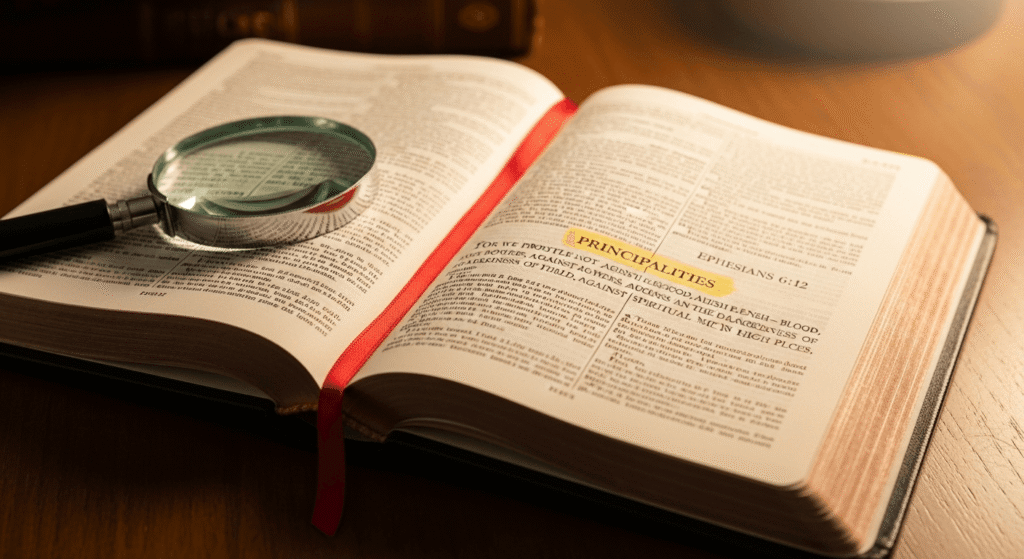
In Ephesians 6:12, the Apostle Paul explains that believers face a spiritual battle that goes beyond human conflicts. The verse states:
“For we wrestle not against flesh and blood, but against principalities, against powers, against the rulers of the darkness of this world, against spiritual wickedness in high places.” (Ephesians 6:12, KJV)
In this context, principalities refer to spiritual beings or authorities that operate in the unseen realm. Paul teaches that Christians must recognize the reality of spiritual warfare and rely on God’s strength rather than their own. The verse emphasizes that the true enemy is not other people but spiritual forces opposed to God’s purposes.
Principalities Spiritual Meaning
The spiritual meaning of principalities relates to positions of authority and influence within the spiritual realm. In the Bible, principalities are often understood as powerful spiritual entities that seek to oppose God’s will and influence human affairs.
From a Christian perspective, principalities remind believers that spiritual battles can affect individuals, communities, and nations. However, Scripture also teaches that Jesus Christ has authority over every spiritual power.
“And having spoiled principalities and powers, he made a shew of them openly, triumphing over them in it.” (Colossians 2:15, KJV)
This verse reassures believers that Christ has already achieved victory over all spiritual opposition.
What Are Principalities and Powers in the Bible?
The phrase “principalities and powers” appears several times in the New Testament. These terms generally refer to spiritual authorities and forces that exist in the unseen world.
Principalities are often understood as higher-ranking spiritual rulers, while powers may refer to authorities that exercise influence or control. Together, they represent various levels of spiritual beings, both good and evil, depending on the context.
Paul mentions these forces to encourage believers to remain spiritually alert and to trust in God’s protection.
“Put on the whole armour of God, that ye may be able to stand against the wiles of the devil.” (Ephesians 6:11, KJV)
Powers Meaning in the Bible
In biblical language, powers often refer to authorities, forces, or spiritual beings that possess influence. The Greek word frequently translated as “powers” can describe both earthly authorities and supernatural spiritual forces.
When Paul speaks of powers in passages about spiritual warfare, he is usually referring to unseen spiritual authorities that oppose God’s kingdom. Nevertheless, Scripture consistently teaches that God’s power is greater than any spiritual force.
“Greater is he that is in you, than he that is in the world.” (1 John 4:4, KJV)
This promise reminds Christians that God’s presence is stronger than any opposing power.
How to Deal With Principalities and Powers
The Bible teaches that believers should not fear principalities and powers but should respond to spiritual challenges through faith and obedience to God.
Several biblical principles can help Christians stand firm:
- Put on the full armor of God (Ephesians 6:13–18).
- Pray consistently and depend on God’s strength.
- Study and apply God’s Word.
- Resist temptation and remain faithful to Christ.
- Trust in Jesus’ victory over evil.
“Submit yourselves therefore to God. Resist the devil, and he will flee from you.” (James 4:7, KJV)
Rather than relying on human strength, Christians are called to depend on God in every spiritual battle.
Principalities Definition KJV
In the King James Version (KJV), the word principalities generally refers to rulership, dominion, or positions of authority. Depending on the passage, it can describe earthly governments, angelic beings, or spiritual authorities.
The term comes from the idea of being first in rank or holding a position of leadership. In spiritual warfare passages, principalities are usually understood as powerful spiritual rulers operating within the unseen realm.
The KJV uses this word in several places, including Ephesians 6:12 and Colossians 1:16.
Principalities Greek Meaning
The Greek word translated as principalities in many New Testament passages is archē (ἀρχή).
This word can mean:
- Beginning
- Origin
- First place
- Rule
- Authority
- Ruler or governing power
In Ephesians 6:12, the term refers to spiritual rulers or authorities. Understanding the Greek meaning helps readers see that principalities are connected with leadership, influence, and authority rather than merely geographic regions.
The exact nature of these spiritual authorities is not fully explained in Scripture, but they are presented as real forces within the spiritual realm.
What Are Examples of Principalities?
The Bible does not provide a detailed list of principalities by name, but it does offer examples of spiritual beings and powers that exercise influence.
Some commonly cited biblical examples include:
- The “prince of the kingdom of Persia” mentioned in Daniel 10:13.
- The “prince of Greece” mentioned in Daniel 10:20.
- Satan, who is described as exercising influence over the present world system (John 12:31).
- Various spiritual rulers and authorities referenced in Ephesians 6:12.
These examples suggest that spiritual powers may seek to influence nations, cultures, and individuals. However, the Bible’s primary focus is not on identifying these beings but on encouraging believers to trust God and remain faithful.
“All power is given unto me in heaven and in earth.” (Matthew 28:18, KJV)
What Does Principalities Mean in the Bible? (Simple Definition)
The principalities meaning in Bible refers to:
High-ranking spiritual powers or authorities operating in the unseen realm
These powers can be:
God-created authorities
Angelic rulers
Fallen spiritual beings opposed to God
The Bible uses the term to describe rank, rule, and delegated authority, not random chaos.
Original Language Meaning of Principalities
To understand the principalities meaning in Bible, we must examine the original languages.
Greek Meaning (New Testament)
The Greek word used is “Archē”, meaning:
Ruler
Authority
First in rank
Dominion
It refers to structured authority, not just power.
Hebrew Perspective (Old Testament Parallel)
While the exact word principalities appears mainly in the New Testament, the Old Testament describes spiritual rulers over nations, such as:
Angelic princes
Heavenly beings assigned authority
This supports the idea of spiritual governance behind earthly events.
Key Bible Verses About Principalities
Understanding the principalities meaning in Bible requires examining Scripture directly.
Major New Testament Passages
Ephesians 6:12
“For our struggle is not against flesh and blood, but against principalities, against powers…”
Colossians 1:16
“Whether thrones or dominions or rulers or authorities…”
Romans 8:38
“Neither angels nor principalities… will be able to separate us from the love of God.”
These verses show that principalities are real spiritual entities, but not greater than God.
Principalities Meaning in Bible: Good or Evil?
One common question is whether principalities are evil by nature.
Biblical Truth
The Bible teaches:
All authority was created by God
Some spiritual authorities rebelled
Others remain obedient to God
So principalities can be:
Faithful servants of God
Fallen powers opposing God’s will
Hierarchy of Spiritual Authority in the Bible
The principalities meaning in Bible becomes clearer when we see the spiritual hierarchy.
| Rank | Description |
|---|---|
| God | Supreme authority |
| Christ | Head over all powers |
| Angels | Messengers and servants |
| Principalities | Ruling authorities |
| Powers | Executors of influence |
| Humans | Created with dominion on earth |
The Bible emphasizes that Christ reigns above all principalities.
Jesus and Authority Over Principalities
A crucial truth about the principalities meaning in Bible is Jesus’ authority.
Colossians 2:15
“He disarmed the powers and authorities, making a public spectacle of them.”
This verse shows that principalities are not equal to Christ. They are subject to Him.
Symbolism of Principalities in the Bible
The Bible uses principalities symbolically to represent:
| Symbol | Meaning |
|---|---|
| Thrones | Authority |
| Chains | Defeat |
| Darkness | Deception |
| Light | Divine truth |
| Kingdoms | Competing dominions |
Principalities symbolize systems of influence, not random evil.
Spiritual Meaning of Principalities in the Bible
Spiritually, the principalities meaning in Bible teaches several key truths.
1. Evil Is Organized, Not Accidental
The Bible presents evil as structured and strategic, not chaotic.
2. Spiritual Warfare Is Real
Believers face spiritual opposition, not just human conflict.
“Be strong in the Lord and in his mighty power.” (Ephesians 6:10)
Psychological Angle: Why Principalities Matter to the Human Mind
From a psychological perspective, the principalities meaning in Bible explains why:
Evil feels systemic
Injustice feels larger than individuals
Oppression feels organized
The Bible addresses human fear by revealing that evil has limits and God remains sovereign.
Cultural Context: Ancient Beliefs About Spiritual Powers
In biblical times:
People believed nations had spiritual guardians
Empires believed gods ruled territories
The Bible reframed this belief by declaring:
👉 There is only one true God above all principalities
Principalities vs Powers: Biblical Comparison
| Term | Meaning |
|---|---|
| Principalities | Ruling authorities |
| Powers | Active forces |
| Thrones | Positions of rule |
| Dominions | Controlled territories |
Each term describes levels of authority, not chaos.
Case Study: Daniel and the Prince of Persia
Biblical Example (Daniel 10)
Daniel fasted and prayed, yet his answer was delayed.
An angel explained:
A spiritual prince resisted him
Michael intervened
This passage strongly supports the principalities meaning in Bible as territorial spiritual rulers.
Do Principalities Control Humans?
The Bible teaches:
Humans have free will
Principalities influence, not force
God limits their authority
Believers are never helpless.
Practical Lessons from the Principalities Meaning in Bible
Understanding principalities teaches believers to:
Rely on God, not fear
Pray with spiritual awareness
Avoid blaming people for spiritual issues
Trust Christ’s authority
Knowledge replaces fear with confidence.
How Believers Should Respond to Principalities
The Bible instructs believers to:
Stand firm in faith
Put on spiritual armor
Pray consistently
Trust Christ’s victory
