
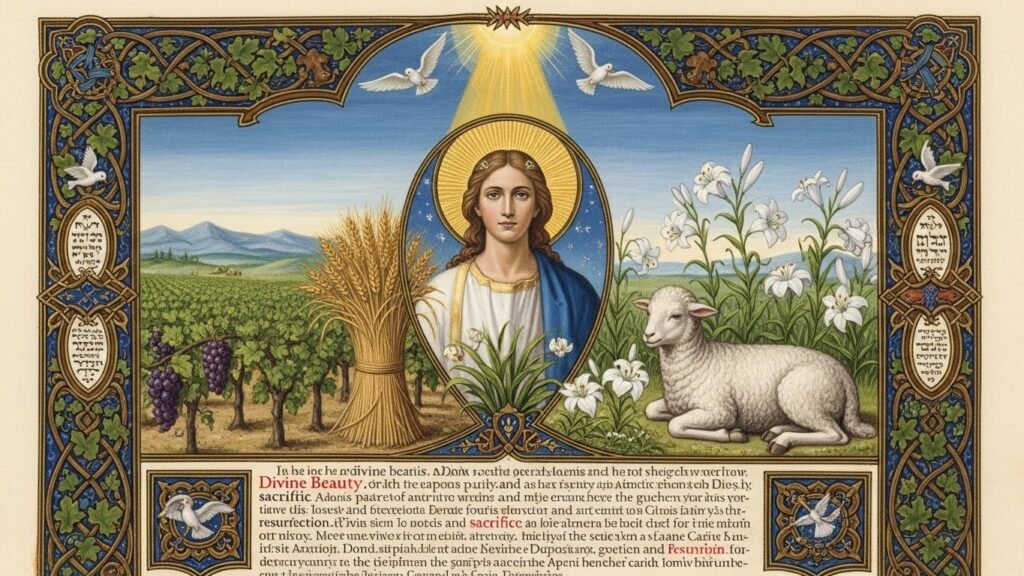

Adonis Meaning in Bible Verse
The name Adonis does not appear in the Bible by that exact name. However, the Bible does mention a figure closely associated with Adonis through the name Tammuz. In ancient Near Eastern and Greek traditions, Tammuz and Adonis were linked as dying-and-rising vegetation deities worshiped in neighboring cultures.
One biblical reference is found in Ezekiel 8:14, where the prophet witnessed women mourning for Tammuz at the entrance of the Lord’s temple:
“Then he brought me to the door of the gate of the Lord’s house which was toward the north; and, behold, there sat women weeping for Tammuz.” — Ezekiel 8:14 (KJV)
This passage condemns pagan worship taking place in God’s temple. Rather than endorsing Adonis or Tammuz, the Bible presents such practices as idolatry that turned people away from the worship of the one true God.
Female Adonis Meaning
The phrase “Female Adonis” is a modern expression rather than a biblical term. Since Adonis became a symbol of extraordinary male beauty in Greek mythology, calling someone a “female Adonis” simply means she is exceptionally beautiful or attractive.
From a biblical perspective, physical beauty is appreciated but is never presented as the highest virtue. Scripture teaches that godly character is far more valuable than outward appearance.
“Charm is deceitful, and beauty is vain: but a woman that feareth the Lord, she shall be praised.” — Proverbs 31:30 (KJV)
The Bible encourages believers to cultivate faith, humility, wisdom, and love rather than relying solely on physical attractiveness.
Adonis Greek God
In Greek mythology, Adonis was a handsome young man associated with beauty, love, and vegetation. According to the myth, he was loved by the goddess Aphrodite and died tragically before returning each year, symbolizing the seasonal cycle of nature.
Although Adonis was revered in certain ancient cultures, the Bible never recognizes him as a true deity. Instead, Scripture consistently warns against worshiping false gods or participating in pagan religious practices.
“Thou shalt have no other gods before me.” — Exodus 20:3 (KJV)
For Christians, worship belongs to God alone, and biblical faith rejects devotion to mythological gods.
Adonis Meaning in Bible KJV
The King James Version (KJV) does not contain the name Adonis. Instead, the closest biblical connection is Tammuz in Ezekiel 8:14, where women are described as mourning for this pagan figure.
The KJV uses this account to illustrate Israel’s spiritual unfaithfulness by adopting foreign religious customs.
Therefore, while Adonis himself is absent from the KJV, the biblical message remains clear: believers are called to worship God alone and avoid idolatry.
Adonis Meaning in Hebrew
The name Adonis is Greek in origin and is not a Hebrew name. It comes from the Greek Adōnis, which was derived from the Semitic word ‘adon’ (אָדוֹן), meaning “lord,” “master,” or “owner.”
In the Hebrew Bible, ‘adon’ is commonly used as a respectful title for human rulers or masters. A related form, Adonai, is a reverent title meaning “Lord” and is used in reference to God.
Although the words share a linguistic connection, Adonis should not be confused with Adonai. Adonis refers to a mythological figure, whereas Adonai is one of the sacred titles for the God of Israel.
Adonis Meaning in Bible Catholic
Catholic Bibles, like Protestant translations, do not include the name Adonis. However, they contain Ezekiel 8:14, which mentions women mourning for Tammuz, a deity often associated historically with Adonis.
Catholic teaching views this passage as a warning against idolatry and emphasizes exclusive worship of God.
The Catechism of the Catholic Church and Scripture alike affirm the First Commandment, calling believers to reject false worship and remain faithful to the Lord.
“You shall worship the Lord your God, and him only shall you serve.” — Matthew 4:10 (ESV)
Thus, the Catholic understanding of Adonis aligns with the broader biblical teaching that mythological deities are not to be worshiped.
Adonis Meaning in Greek
In Greek, Adonis (Ἄδωνις) refers to the legendary youth celebrated for his remarkable beauty. The name ultimately comes from the Semitic word ‘adon’, meaning “lord” or “master.”
Over time, Adonis became a symbol of youthful attractiveness, romance, and the renewal of nature. Today, the name is often used figuratively to describe a very handsome man.
From a biblical perspective, however, lasting value is found not in physical appearance but in devotion to God and righteous character.
“But the Lord looketh on the heart.” — 1 Samuel 16:7 (KJV)
Adonis Pronunciation
Adonis is commonly pronounced as uh-DON-iss, with the emphasis on the second syllable.
- uh – like the “a” in about
- DON – rhymes with on
- iss – sounds like is
This pronunciation is widely accepted in English for both discussions of Greek mythology and historical references.
Detailed Explanation of Adonis Meaning in the Bible
Is Adonis Mentioned in the Bible?
The name Adonis is not directly mentioned in the Bible. However, it is deeply connected to ancient pagan worship practices that the Bible often warns against.
Adonis originates from Greek mythology, where Adonis was considered a god of beauty, desire, vegetation, and rebirth. His worship was prominent in the ancient Near East, including regions close to biblical lands.
📖 “Do not follow other gods, the gods of the peoples around you.” (Deuteronomy 6:14)
This verse reflects the biblical position toward pagan figures like Adonis.
Origin and Historical Background of Adonis
Meaning and Etymology
Name: Adonis
Origin: Greek mythology (influenced by Near Eastern fertility cults)
Meaning: “Lord” or “Master” (from Semitic root Adon)
Interestingly, the Hebrew word “Adon” means lord, but Adonis is not related to Adonai, the sacred biblical name for God. This distinction is critical in understanding the Adonis meaning in Bible.
Adonis vs Adonai: A Critical Biblical Comparison
| Aspect | Adonis | Adonai |
|---|---|---|
| Origin | Greek mythology | Hebrew Scripture |
| Nature | Pagan deity | One true God |
| Focus | Physical beauty, desire | Holiness, authority |
| Worship | Seasonal, emotional | Eternal, covenantal |
| Biblical stance | Rejected | Revered |
📖 “I am the LORD; that is my name; my glory I give to no other.” (Isaiah 42:8)
This comparison highlights why Adonis has no place in biblical worship, even though the words may sound similar.
Symbolism of Adonis in a Biblical Context
From a biblical worldview, Adonis symbolically represents:
Worldly beauty and temporary glory
Human obsession with appearance
Idolatry of the physical form
Fading youth and mortality
📖 “Charm is deceptive, and beauty is fleeting.” (Proverbs 31:30)
Thus, when considering the Adonis meaning in Bible, Scripture contrasts it with inner character and spiritual depth.
Case Study: Pagan Beauty vs Biblical Character
Biblical Example – King Saul
Tall, handsome, physically impressive
Chosen by people, not by spiritual depth
Failed due to lack of obedience and humility
📖 “The LORD does not look at the things people look at.” (1 Samuel 16:7)
This story reflects the same lesson associated with Adonis symbolism: external beauty without spiritual obedience leads to downfall.
Cultural Context: Why Adonis Was Popular
In ancient cultures:
Beauty was equated with divine favor
Fertility gods symbolized seasonal renewal
Emotional rituals replaced moral discipline
The Bible consistently opposed such beliefs, emphasizing faithfulness, holiness, and obedience over physical admiration.
Psychological Angle of Adonis Meaning
From a psychological perspective, Adonis reflects:
Society’s fixation on physical perfection
Identity built on appearance
Fear of aging and loss of worth
Modern psychology confirms what Scripture warned long ago: self-worth based on appearance leads to insecurity and anxiety.
📖 “For where your treasure is, there your heart will be also.” (Matthew 6:21)
Spiritual Angle: Biblical Lessons from Adonis
Spiritually, Adonis serves as a warning symbol, teaching believers to:
Reject idolizing beauty or body image
Focus on spiritual fruit rather than appearance
Anchor identity in God, not admiration
📖 “Set your minds on things above, not on earthly things.” (Colossians 3:2)
Adonis Meaning in Bible vs Biblical Beauty
| Biblical Beauty | Adonis Symbolism |
|---|---|
| Inner character | Outer appearance |
| Eternal value | Temporary attraction |
| God-centered | Self-centered |
| Humility | Pride |
The Bible promotes beauty of the heart, not the body alone.
Practical Advice: How Believers Should Respond to Adonis-Type Thinking
Value character over appearance
Avoid idolizing physical beauty
Teach youth spiritual identity
Practice gratitude for God-given worth
Focus on spiritual growth
Real-life example:
A believer choosing integrity and humility over social validation reflects biblical wisdom over Adonis-like thinking.
Modern Usage of the Name Adonis
Today, Adonis is used as a personal name or metaphor for attractiveness. From a Christian perspective:
The name itself is not biblical
Its meaning should be understood carefully
Common Misunderstandings About Adonis Meaning in Bible
❌ Adonis is a biblical name
❌ Adonis is related to Adonai
❌ The Bible supports physical idolization
✅ The Bible warns against such ideas and promotes spiritual depth.
