
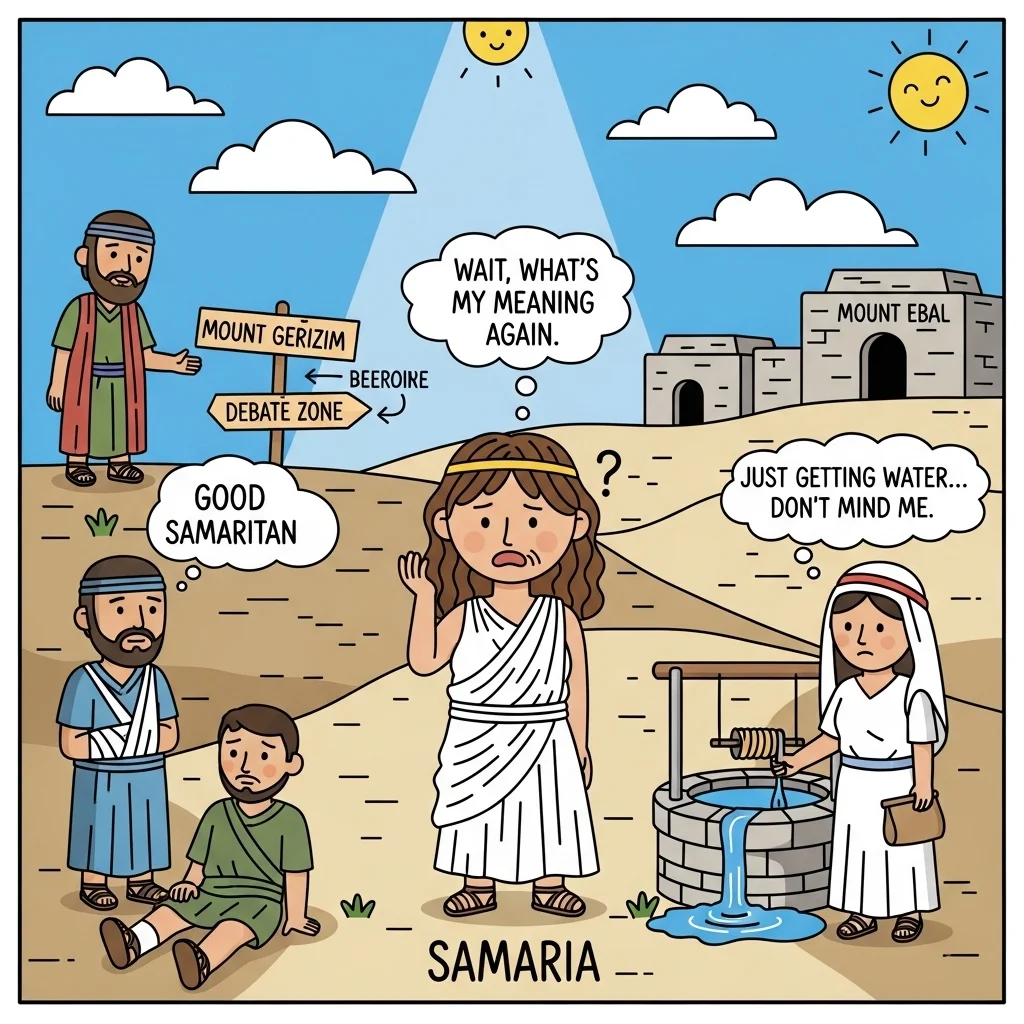

What is Samaria?
Samaria was originally a city founded by King Omri around 880 BCE and later became the capital of the northern kingdom of Israel (1 Kings 16:24).
- Meaning of the Name: The Hebrew name Shomron is often interpreted as “watchtower” or “guarded”.
- Biblical Role: Samaria symbolized both political power and spiritual challenge, often associated with the northern kingdom’s idolatry and rebellion against God.
Samaria Meaning in Bible: Spiritual Symbolism
Samaria is more than just a city; it carries profound spiritual lessons:
1. Division and Rebellion
- After King Solomon’s reign, Israel split into two kingdoms: Judah (south) and Israel (north, with Samaria as its capital).
- Samaria symbolizes human rebellion against God, as the northern kingdom frequently fell into idolatry (1 Kings 12:25-33).
2. Judgment and Consequences
- Samaria’s history reflects God’s judgment for disobedience (Hosea 13:16).
- The fall of Samaria reminds believers that turning away from God leads to spiritual and moral decay.
3. Redemption and Grace
- In the New Testament, Samaria becomes a symbol of God’s mercy and outreach, especially through Jesus’ interactions:
- The Samaritan Woman at the Well (John 4:4-42) – Samaria represents a bridge between social barriers and God’s inclusive salvation.
- Good Samaritan parable (Luke 10:25-37) – Emphasizes mercy, compassion, and faith beyond traditional boundaries.
4. Spiritual Watchtower
- As its Hebrew name suggests, Samaria also symbolizes vigilance: God’s people are called to watchfulness and moral integrity, standing as spiritual sentinels against sin.
Cultural and Historical Context of Samaria
1. Old Testament
- Capital of the northern kingdom of Israel.
- Center of idolatry, political intrigue, and repeated prophetic warnings.
- Prophets like Elijah and Hosea addressed Samaria, calling for repentance and fidelity to God.
2. New Testament
- Samaria was socially and religiously controversial. Jews often avoided Samaritans due to historical tension.
- Jesus’ ministry emphasized God’s love and salvation for all, breaking social and ethnic barriers.
3. Modern Relevance
- Samaria symbolizes both human failure and divine grace.
- It reminds us of the consequences of rebellion and the inclusivity of God’s mercy.
Psychological and Spiritual Angle
The story of Samaria offers lessons on human behavior, spiritual growth, and moral vigilance:
- Consequences of Division: Division in Samaria warns of internal and societal disunity.
- Repentance and Redemption: Spiritual failure can be restored through humility and faith.
- Overcoming Prejudice: Jesus’ engagement with Samaritans teaches openness, mercy, and reconciliation.
- Spiritual Awareness: Like a watchtower, believers must remain alert to sin, injustice, and temptation.
Practical Lessons from Samaria
- Value Obedience to God: Avoid the pitfalls of moral compromise and rebellion.
- Seek Redemption: No matter past failures, God offers mercy and restoration.
- Break Social Barriers: Embrace compassion and inclusivity, as Jesus did with the Samaritans.
- Practice Vigilance: Stay spiritually alert to avoid the moral decay exemplified by Samaria’s history.
- Learn from History: Understand how societal choices reflect spiritual health and divine favor.
Case Study: Samaria in Modern Application
A church outreach program in Samaria’s modern region, engaging diverse communities, illustrates the biblical lessons of mercy and reconciliation. By bridging historical, cultural, and social divides, the initiative embodies the New Testament symbolism of Samaria as a place where God’s love transcends boundaries.
Table: Samaria Meaning in Bible Across Dimensions
| Aspect | Meaning / Significance |
|---|---|
| Etymology | “Watchtower,” “Guarded” |
| Spiritual | Division, rebellion, redemption, vigilance |
| Cultural | Capital of northern Israel, historical idolatry, ethnic tension |
| Psychological | Awareness of sin, consequences of disunity, mercy |
| Biblical Alignment | John 4 (Samaritan woman), Luke 10 (Good Samaritan), Hosea 13 (judgment) |
