
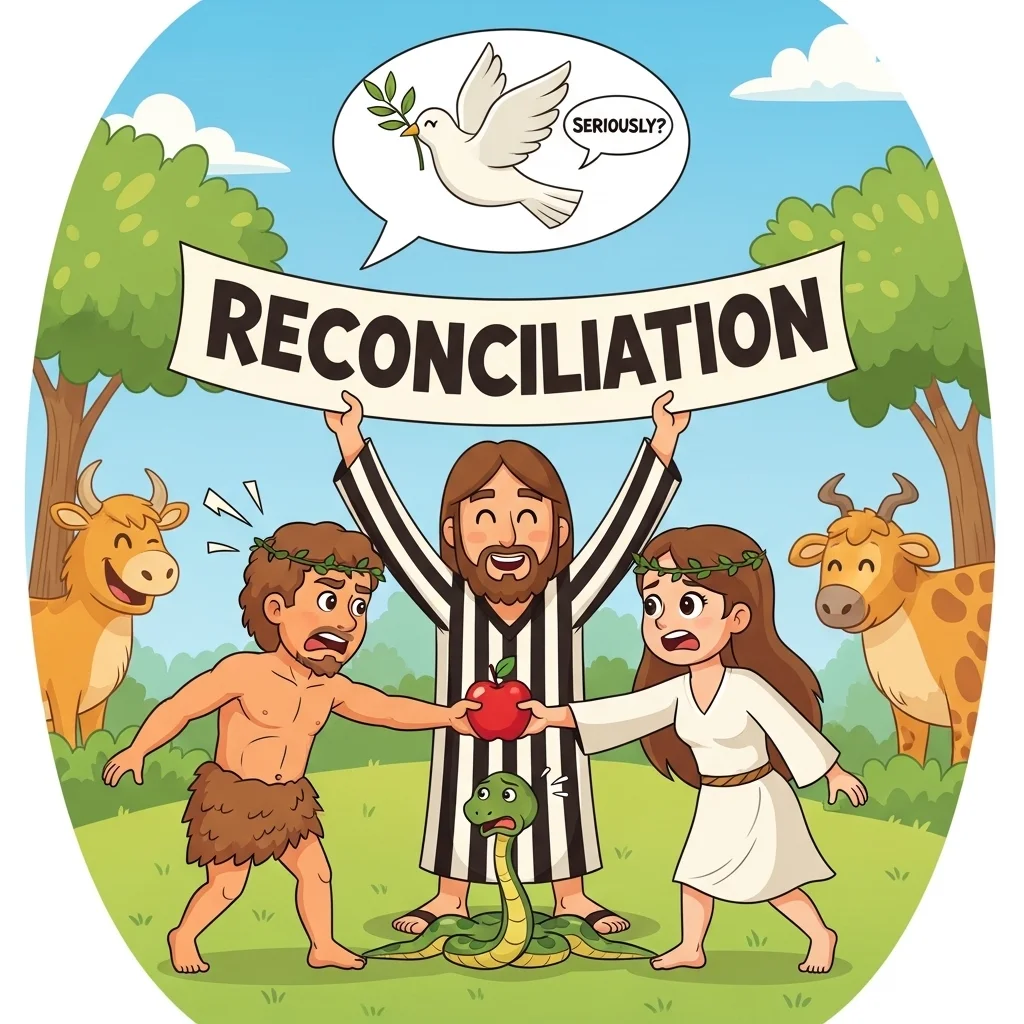

Detailed Explanation of Reconciliation Meaning in Bible
Biblical Definition of Reconciliation
In the Bible, reconciliation means:
- Restoring a broken relationship
- Bringing peace where there was conflict
- Reuniting after separation
The Greek word often used is katallagē, which means “exchange” or “restoration to favor.”
Key Biblical References
The reconciliation meaning in Bible is clearly explained in several passages:
- 2 Corinthians 5:18–19 – God reconciled us to Himself through Jesus Christ
- Romans 5:10 – “We were reconciled to God through the death of His Son”
- Colossians 1:20 – Peace made through the cross
These verses show that reconciliation is central to the message of salvation.
Symbolism of Reconciliation Meaning in Bible
Reconciliation is rich with symbolic meaning in Scripture.
1. From Separation to Unity
Sin creates a gap between humans and God. Reconciliation bridges that gap.
👉 Symbolic meaning:
Moving from distance to closeness
2. Peace After Conflict
Reconciliation represents the end of hostility.
👉 Symbolic meaning:
Restored peace and harmony
3. A New Beginning
Reconciliation is not just repair—it’s renewal.
👉 Symbolic meaning:
A fresh start with restored purpose
Case Study / Example: The Prodigal Son
One of the clearest illustrations of the reconciliation meaning in Bible is found in the parable told by Jesus Christ.
The Story
A son leaves his father, wastes his inheritance, and ends up in despair. When he returns, expecting rejection, the father welcomes him with open arms.
Interpretation
This story represents:
- Humanity turning away from God
- God’s willingness to forgive
- The joy of restoration
👉 Lesson:
The reconciliation meaning in Bible shows that no matter how far someone goes, restoration is always possible
Cultural Meanings of Reconciliation
Biblical Culture
In ancient times, reconciliation often involved:
- Sacrifices
- Mediators
- Public acts of forgiveness
Modern Perspective
Today, reconciliation is often seen as:
- Emotional healing
- Conflict resolution
- Relationship repair
Comparison Table: Biblical vs Modern Reconciliation
| Aspect | Biblical View | Modern View |
|---|---|---|
| Focus | Relationship with God | Human relationships |
| Method | Sacrifice and grace | Communication and compromise |
| Outcome | Spiritual restoration | Emotional peace |
| Authority | God initiates reconciliation | Humans initiate reconciliation |
👉 This highlights how the reconciliation meaning in Bible is deeper and more spiritually rooted.
Psychological Angle of Reconciliation Meaning in Bible
Reconciliation is not just spiritual—it also impacts mental health.
Emotional Benefits
- Relief from guilt
- Healing from past wounds
- Restoration of trust
Psychological Insight
Holding onto conflict can lead to:
- Stress
- Anxiety
- Emotional distance
Reconciliation, on the other hand, promotes:
- Inner peace
- Emotional stability
- Stronger relationships
👉 Key takeaway:
The reconciliation meaning in Bible aligns with psychological well-being by encouraging forgiveness and healing.
Spiritual Angle of Reconciliation Meaning in Bible
This is the core of the concept.
God Initiates Reconciliation
The Bible teaches that reconciliation begins with God.
- Through Jesus Christ, the barrier of sin is removed
- Humans are invited back into a relationship with God
The Role of the Cross
The cross symbolizes:
- Sacrifice
- Forgiveness
- Restoration
Ministry of Reconciliation
Believers are called to:
- Share the message of reconciliation
- Help others find peace with God
👉 Spiritual truth:
The reconciliation meaning in Bible is about grace, restoration, and divine love
Practical Advice: Living Out Reconciliation
Understanding reconciliation is powerful—but living it out is transformative.
1. Seek Forgiveness
- Admit mistakes
- Be honest and humble
2. Forgive Others
- Let go of resentment
- Choose peace over pride
3. Restore Relationships
- Take initiative
- Communicate openly
4. Strengthen Your Relationship with God
- Pray regularly
- Reflect on Scripture
- Accept grace fully
