
Lazarus Meaning in Bible Anime
Lazarus is a science-fiction anime series created by acclaimed director Shinichirō Watanabe, known for works such as Cowboy Bebop. The anime is set in a futuristic world and follows a team of agents tasked with preventing a global catastrophe. While the series shares the name “Lazarus,” it is not a direct adaptation of the biblical Lazarus. The title likely draws inspiration from the biblical theme of resurrection and new life.
Lazarus and the Rich Man in the Bible
The story of Lazarus and the rich man is found in Gospel of Luke 16:19–31. Jesus tells of a poor man named Lazarus who suffered greatly during his life while a wealthy man lived in luxury. After death, Lazarus was comforted in Abraham’s side, while the rich man experienced torment.
This parable teaches important lessons about compassion, repentance, and the eternal consequences of one’s choices. It emphasizes that earthly wealth does not guarantee God’s favor and that believers should care for those in need.
Key Verse:
“So it was that the beggar died, and was carried by the angels to Abraham’s bosom.” (Luke 16:22)
Lazarus Meaning in Bible Story Summary
The most famous Lazarus in the Bible was Lazarus of Bethany, the brother of Mary and Martha. His story is recorded in Gospel of John 11.
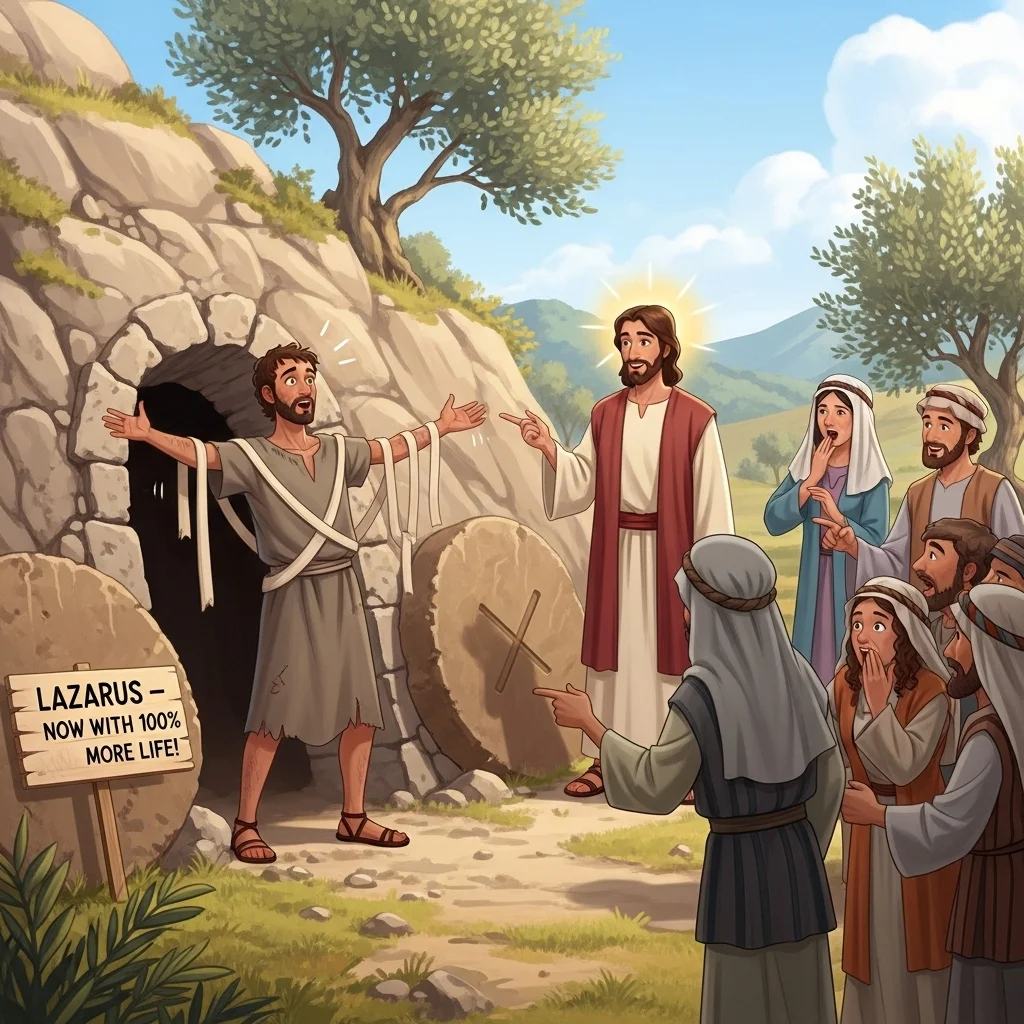
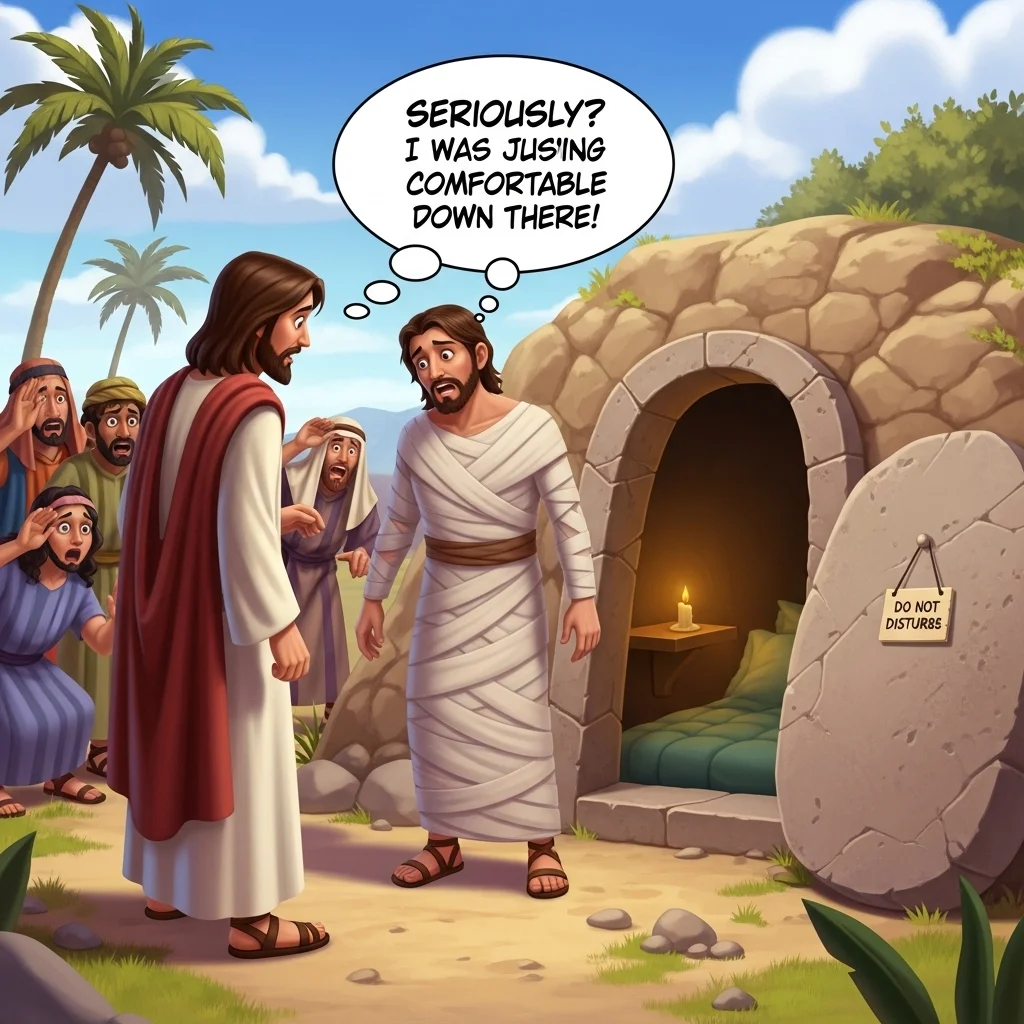
Lazarus became seriously ill and died before Jesus arrived in Bethany. He was buried in a tomb for four days. Jesus then performed one of His greatest miracles by calling Lazarus out of the grave and restoring him to life.
The miracle demonstrated Jesus’ divine power over death and pointed to His own future resurrection.
Key Verse:
“Jesus said to her, ‘I am the resurrection and the life.'” (John 11:25)
Lazarus Raised From the Dead Bible Verse
The account of Lazarus being raised from the dead is found in John 11:43–44.
Bible Verse:
“When he had said this, Jesus called in a loud voice, ‘Lazarus, come out!’ The dead man came out, his hands and feet wrapped with strips of linen, and a cloth around his face.” (John 11:43–44)
This miracle revealed Jesus’ authority over death and strengthened the faith of many who witnessed it.
Who Are the Two Lazarus Meaning in Bible?
The Bible mentions two different individuals named Lazarus:
- Lazarus of Bethany – The brother of Mary and Martha whom Jesus raised from the dead (John 11).
- Lazarus in the Parable of the Rich Man – A poor beggar mentioned in Jesus’ parable in Luke 16:19–31.
Many scholars believe the second Lazarus was a fictional character within a parable rather than a historical individual, whereas Lazarus of Bethany was a real person known personally by Jesus.
Lazarus of Bethany
Lazarus of Bethany was a close friend of Jesus and lived in Bethany with his sisters, Mary of Bethany and Martha of Bethany. His story is primarily found in John 11 and John 12.
Lazarus is best known for being raised from the dead after spending four days in the tomb. This miracle became one of the strongest testimonies to Jesus’ divine authority and contributed to growing belief in Him among many people.
How Did Lazarus Die the Second Time?
The Bible does not tell us how or when Lazarus died after being raised from the dead. Since Lazarus was restored to ordinary human life rather than given a glorified resurrection body, he eventually experienced physical death again like all other people.
Scripture remains silent about the circumstances of his second death. Any details beyond this are based on later traditions rather than biblical teaching.
What Happened to Lazarus Meaning in Bible?
Lazarus became ill, died, and was buried in a tomb. Four days later, Jesus arrived in Bethany and raised him from the dead through a miraculous command.
After his resurrection, Lazarus continued living among the people. John 12 records that many came to see him because his resurrection served as powerful evidence of Jesus’ ministry.
His story highlights God’s power over death and points believers toward the hope of eternal life through Christ.
Key Verse:
“For this reason many of the Jews went away and believed in Jesus.” (John 12:11)
Lazarus’ account remains one of the Bible’s clearest demonstrations of Jesus’ declaration: “I am the resurrection and the life” (John 11:25).
Lazarus Meaning in Bible
The name Lazarus is derived from the Hebrew name Eleazar, which means “God has helped” or “God is my help”. This meaning alone reveals why Lazarus’ story carries such a profound spiritual lesson: even in moments of despair or death, God’s help is always present.
| Aspect | Meaning / Symbolism |
|---|---|
| Name Origin | Hebrew “Eleazar” – God has helped |
| Biblical Role | Friend of Jesus, raised from the dead |
| Symbolic Meaning | Faith, resurrection, hope, divine intervention |
| Spiritual Lesson | God’s power can bring life in hopeless situations |
The story of Lazarus is not just a historical narrative; it is a spiritual metaphor. The death and resurrection of Lazarus illustrate the power of faith and God’s ability to restore what seems lost.
Lazarus in the Gospel of John: A Detailed Look
In John 11, Lazarus falls ill. His sisters send word to Jesus, but Jesus delays His visit. By the time He arrives, Lazarus has been dead for four days. Martha, his sister, expresses her grief and faith, saying, “Lord, if you had been here, my brother would not have died” (John 11:21).
Jesus responds with a powerful statement: “I am the resurrection and the life. He who believes in me will live, even though he dies” (John 11:25). This is the cornerstone of the Lazarus meaning in the Bible—faith in God transcends death.
Key Lessons from John 11:
- Faith amid despair: Even when Lazarus was dead, belief in Jesus’ power remained strong.
- God’s timing is perfect: Delay does not mean denial; sometimes God’s plan unfolds in ways we don’t immediately understand.
- Resurrection as hope: Lazarus’ revival symbolizes spiritual awakening and eternal life for believers.
Symbolism and Spiritual Insights
The story of Lazarus holds multiple layers of symbolism:
- Death and Resurrection: Represents spiritual renewal and the hope of eternal life.
- Faith in Action: Martha and Mary’s trust in Jesus illustrates living faith even in challenging times.
- God’s Miraculous Power: Lazarus’ resurrection is a testament to divine intervention and miracles.
- Transformation through Christ: Lazarus’ story foreshadows Jesus’ ultimate resurrection and victory over death.
In essence, Lazarus symbolizes hope in hopeless situations. His name reminds us that “God has helped,” a promise that continues to inspire faith today.
Cultural and Historical Significance
Beyond the biblical text, Lazarus has influenced culture, art, and literature:
- Art: Medieval and Renaissance paintings often depict Lazarus emerging from the tomb, symbolizing the triumph of life over death.
- Literature: Lazarus’ story inspired poets and authors to explore themes of redemption, divine intervention, and hope.
- Popular Culture: Phrases like “rise like Lazarus” are used to describe recovery from extreme difficulty.
In Jewish and Christian traditions, Lazarus also serves as a reminder of faith, perseverance, and God’s ultimate plan.
Psychological Perspective
From a psychological angle, the story of Lazarus can be interpreted as a metaphor for emotional and spiritual revival:
- Resilience: Lazarus’ return to life parallels human ability to recover from trauma or loss.
- Hope in adversity: Believing in a positive outcome, even when circumstances seem dire, is a psychological boost.
- Faith as mental strength: Trusting in divine timing reduces anxiety and fosters patience.
Modern psychology often mirrors these spiritual insights by emphasizing faith, hope, and optimism as key components of mental well-being.
Practical Lessons from Lazarus’ Story
- Patience in Waiting: God’s timing may differ from ours, but delays are not denials.
- Faith During Hardships: Even in life’s “dead” moments, trust in God can bring renewal.
- Supporting Others: Martha and Mary’s reliance on Jesus shows the importance of community support and guidance.
- Embrace Spiritual Renewal: Lazarus’ resurrection reminds believers to seek continual spiritual growth.
Example: Just like Lazarus’ four days in the tomb, people may experience seasons of struggle. Yet, by maintaining faith and seeking help—spiritual or practical—they can experience personal “resurrections” in health, relationships, or career.
Case Study: Modern-Day Lazarus
Consider a person recovering from a life-threatening illness. Initially, the prognosis seems grim, similar to Lazarus’ death. With medical intervention, faith, and support, they regain health. This modern-day scenario mirrors the Lazarus meaning in Bible—life restoration through hope, help, and resilience.
