

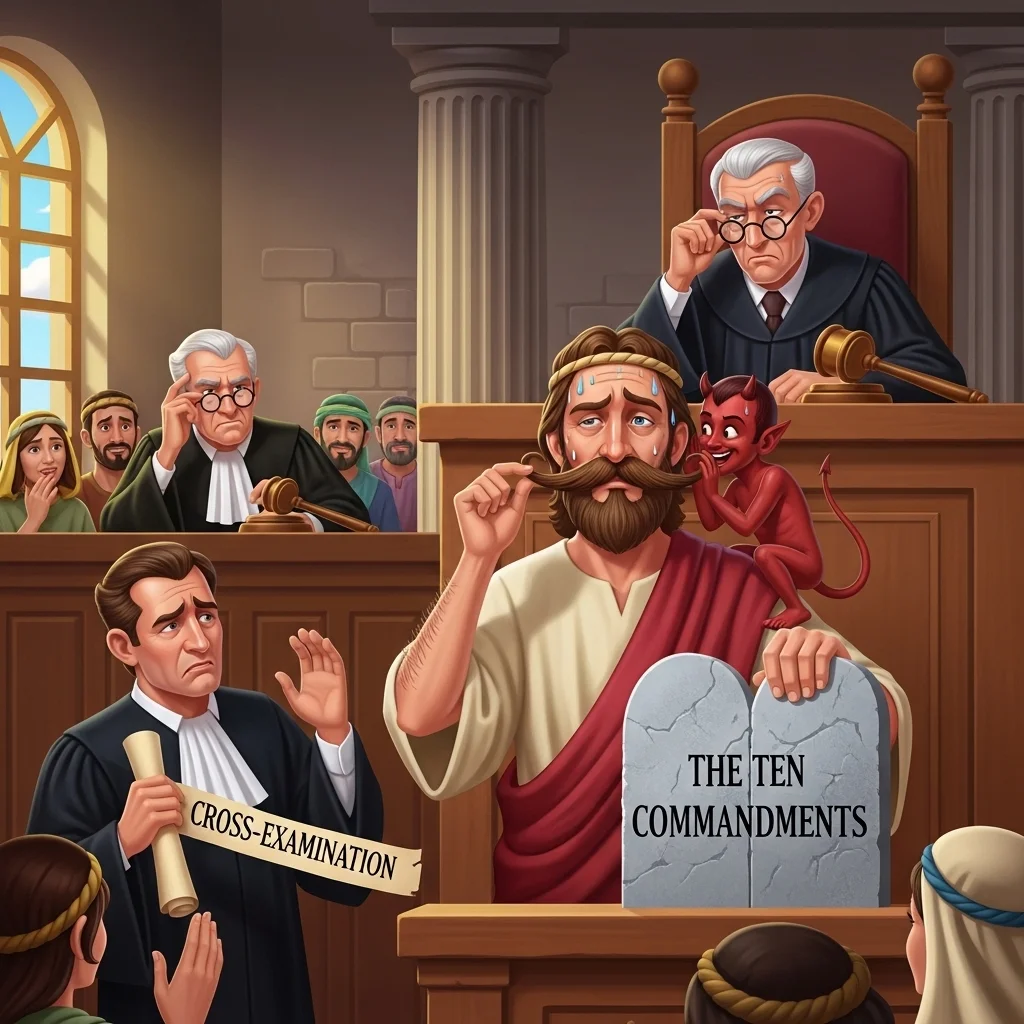
What Is the False Witness Meaning in Bible?
The false witness meaning in Bible is directly connected to the Ninth Commandment found in Book of Exodus 20:16:
“You shall not bear false witness against your neighbor.”
This commandment was given through Moses to the Israelites as part of the Ten Commandments at Mount Sinai.
At its core, the false witness meaning in Bible refers to:
Giving untrue testimony
Making false accusations
Spreading damaging lies
Distorting facts to harm someone
It is not just casual dishonesty. It is deliberate deception intended to harm.
In ancient Israel, legal cases depended heavily on witness testimony. If someone lied in court, it could lead to severe injustice—even execution.
That’s why Scripture takes false witness extremely seriously.
Biblical Context: Why False Witness Was So Dangerous
In biblical times, there were no surveillance cameras, no written contracts for everything, and no digital records. Legal decisions often depended on:
Two or three witnesses
Verbal testimony
Community reputation
According to Book of Deuteronomy 19:15, a matter was established by two or three witnesses. That system worked only if witnesses told the truth.
Now imagine someone manipulating that system.
The law in Deuteronomy 19:16–21 even required that if a witness was proven false, they would receive the punishment they intended for the accused. That shows how seriously God viewed false testimony.
The false witness meaning in Bible therefore connects directly to:
Justice
Community trust
Social stability
Covenant faithfulness
False witness was not just a personal sin—it was a threat to the entire society.
False Witness in the Ten Commandments
The command appears in the Ten Commandments, which form the moral foundation of biblical law.
These commandments are found in:
Book of Exodus
Book of Deuteronomy
The Ninth Commandment specifically protects:
Reputation
Legal fairness
Community integrity
Interestingly, most of the Ten Commandments deal with actions (murder, theft, adultery). But this one deals with words.
Why?
Because words can destroy just as powerfully as weapons.
Symbolism and Deeper Meaning
Beyond courtroom testimony, the false witness meaning in Bible symbolizes something deeper:
1. Truth vs. Deception
Throughout Scripture, truth represents God’s nature. Jesus later says in Gospel of John 14:6:
“I am the way, the truth, and the life.”
False witness, therefore, aligns with deception—something consistently associated with evil.
2. Light vs. Darkness
Truth brings light. Lies create darkness and confusion.
False witness symbolizes spiritual darkness spreading through relationships.
3. Covenant Betrayal
Israel lived under a covenant with God. Bearing false witness broke trust within the covenant community.
It was not just breaking a rule. It was betraying a relationship.
Case Study: The Trial of Jesus
One of the most powerful biblical examples of false witness appears in the trial of Jesus Christ.
In Gospel of Matthew 26:59–61, false witnesses were brought forward to testify against Jesus.
They twisted His words and created misleading accusations. These false testimonies contributed to His unjust condemnation.
This moment perfectly illustrates the false witness meaning in Bible:
False accusations
Twisted truth
Corrupt legal process
Innocent suffering
It shows how destructive false witness can be when combined with power and manipulation.
Cultural Meaning in Ancient Israel
In ancient Near Eastern cultures, honor and reputation were everything.
If someone bore false witness against you:
Your social standing could collapse
Your family’s reputation could suffer
You could lose property or freedom
In collectivist societies like ancient Israel, a person’s identity was tied to community perception. That made false witness especially devastating.
This cultural background deepens the false witness meaning in Bible: it was about protecting communal harmony and justice.
Psychological Angle: Why Do People Bear False Witness?
Understanding the false witness meaning in Bible also requires examining human psychology.
Why do people lie about others?
Common motives include:
| Motive | Explanation |
|---|---|
| Jealousy | Wanting to damage someone more successful |
| Fear | Protecting oneself from consequences |
| Revenge | Seeking emotional payback |
| Power | Controlling outcomes |
| Social Approval | Impressing or aligning with a group |
False witness often begins in insecurity. It grows through resentment. It ends in harm.
Psychologically, people may justify false testimony as “small” or “necessary,” but Scripture views it as morally serious.
Spiritual Angle: False Witness as a Heart Issue
The false witness meaning in Bible goes beyond external behavior. It points to the heart.
In Book of Proverbs 6:16–19, false witness is listed among the seven things God hates.
That list includes:
A lying tongue
A false witness who pours out lies
One who stirs up conflict
Notice the connection: false witness creates division.
Spiritually, false witness reveals:
Lack of reverence for truth
Disregard for justice
Broken relationship with God
Because God is truthful, bearing false witness misrepresents His character.
False Witness vs. Gossip vs. Lying
Many people confuse these concepts. Let’s compare them:
| Term | Definition | Biblical Focus |
|---|---|---|
| False Witness | Giving false testimony that harms someone | Justice and legal fairness |
| Lying | Speaking untruths generally | Personal integrity |
| Gossip | Spreading harmful information (true or false) | Community unity |
The false witness meaning in Bible specifically emphasizes accusation and testimony—especially when someone’s wellbeing is at stake.
However, the principle extends to all forms of harmful deception.
Modern-Day Applications
You might think false witness only applies to courtrooms.
Not true.
Today, false witness can happen through:
Social media posts
Workplace rumors
Online reviews
School accusations
Manipulated screenshots
In the digital age, a false statement can spread globally in seconds.
That makes the false witness meaning in Bible more relevant than ever.
One viral lie can ruin careers, relationships, and mental health.
Practical Advice: How to Avoid Bearing False Witness
Here are practical steps to live out the biblical principle:
1. Verify Before Sharing
Before repeating a claim, ask:
Is it confirmed?
Is it fair?
Is it necessary?
2. Speak Directly, Not Indirectly
If there is conflict, address it privately instead of spreading it.
3. Examine Your Motives
Ask yourself:
Am I trying to protect truth?
Or am I trying to protect my ego?
4. Practice Silence When Unsure
Sometimes the wisest response is restraint.
5. Value Reputation
Treat another person’s name as carefully as you treat your own.
Living according to the false witness meaning in Bible requires courage, humility, and discipline.
Real-Life Scenario: Workplace Accusation
Consider this scenario:
An employee loses a promotion. Out of frustration, they tell management that a coworker manipulated data.
An investigation follows. Tension rises. Trust breaks down.
Later, the accusation is proven false.
Even if the lie is exposed, the damage lingers.
This modern example mirrors the biblical warning about false witness. Words can create ripple effects far beyond what we expect.
