
What Is the Justification Meaning in Bible?
The justification meaning in Bible refers to God’s act of declaring a sinner righteous based on faith. It is a legal declaration, not a gradual process.
In simple terms:
Justification means God treats a believer as righteous because of faith in Him.
The word “justify” in the Bible comes from Greek and Hebrew terms that mean:
To declare righteous
To pronounce innocent
To acquit
It is important to understand that justification does not mean “making someone morally perfect instantly.” Instead, it means God legally declares the believer righteous.
Biblical Foundation of Justification
The justification meaning in Bible is strongly rooted in both the Old and New Testaments.
Old Testament Foundation
One of the earliest references appears in:
Genesis 15:6 – Abraham believed God, and it was credited to him as righteousness.
Abraham was justified by faith long before the law was given. This shows that faith — not works — has always been central to justification.
New Testament Revelation
The Apostle Paul explains justification clearly in:
Romans 3:28 – A person is justified by faith apart from the works of the law.
Romans 5:1 – Therefore, since we have been justified through faith, we have peace with God.
Galatians 2:16 – A person is not justified by works of the law but by faith.
These passages reveal that the justification meaning in Bible centers on faith in God’s saving work.
Justification as a Courtroom Picture
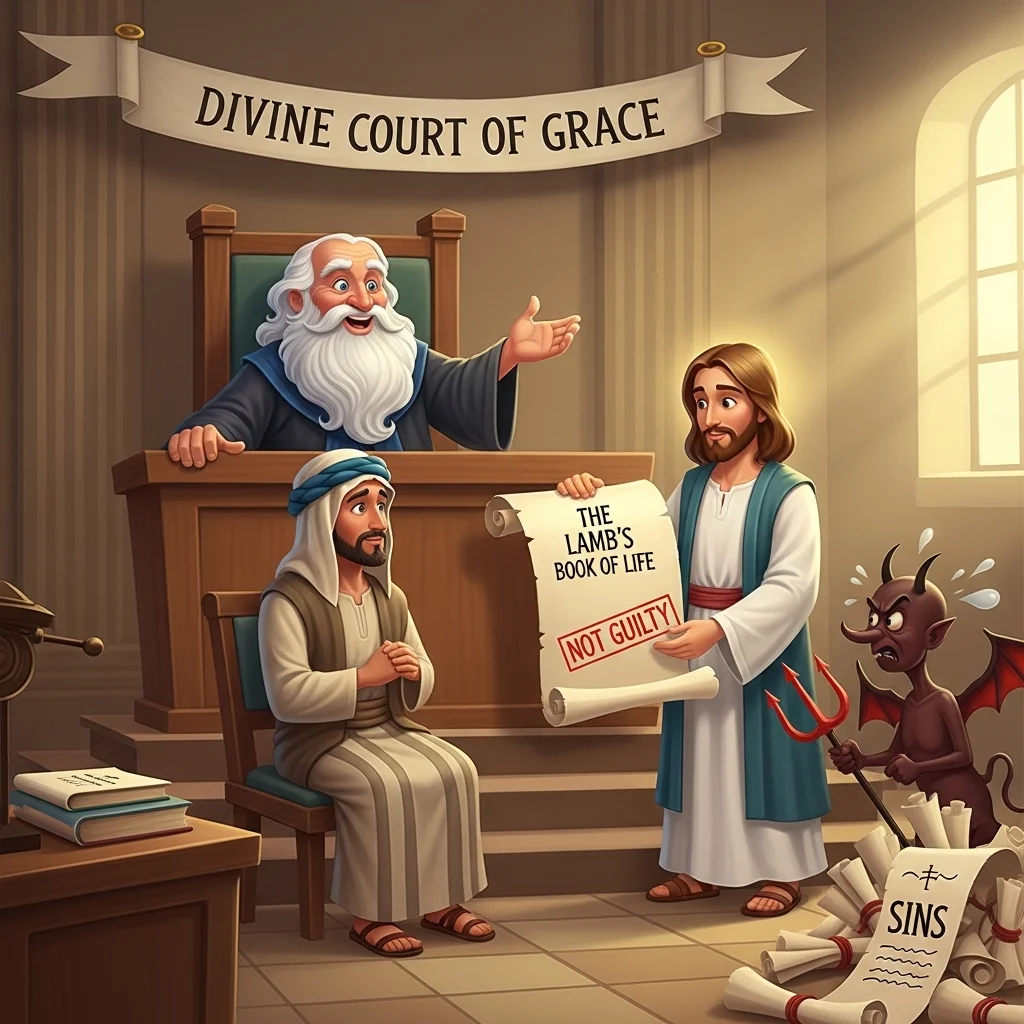
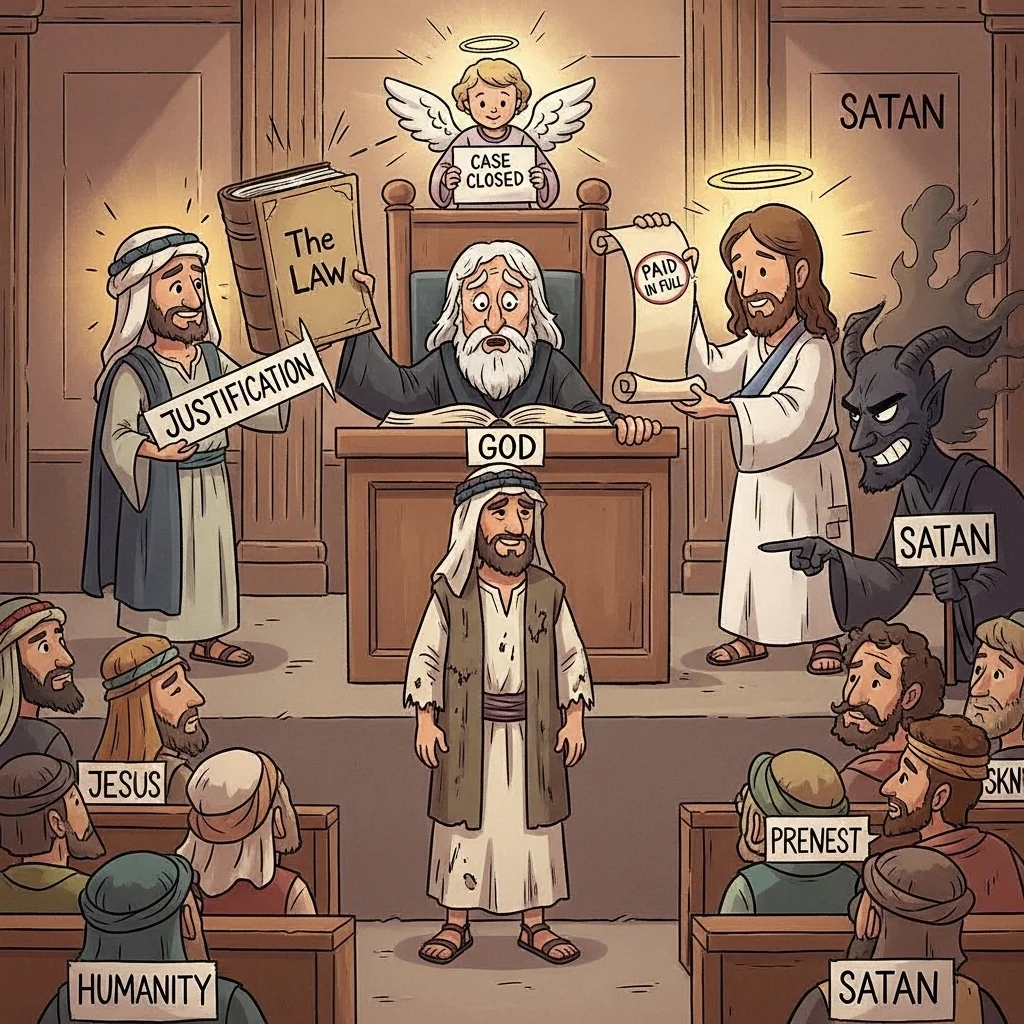
To fully understand the justification meaning in Bible, imagine a courtroom.
You stand guilty before a judge. The evidence is clear. The verdict should be condemnation.
But instead of punishment, the judge declares:
“Not guilty.”
Not because you were innocent — but because someone else paid the penalty.
That is justification.
It is:
A legal declaration
An act of grace
A gift received by faith
This analogy helps explain why justification is about position, not performance.
Symbolism Behind Justification
The justification meaning in Bible is often symbolized through powerful biblical imagery.
1. White Garments
White clothing represents righteousness and purity.
Isaiah 1:18 – Though your sins are like scarlet, they shall be white as snow.
Justification clothes the believer in righteousness.
2. Redemption
Redemption means being bought back.
Justification connects with redemption because it declares someone free after a price has been paid.
3. Peace with God
Romans 5:1 teaches that justification brings peace.
Before justification:
Separation
Guilt
Fear
After justification:
Peace
Assurance
Restoration
Case Study: Abraham – A Model of Justification
Abraham serves as a perfect case study for the justification meaning in Bible.
He was not flawless. He made mistakes. He doubted at times. Yet Scripture says he was justified by faith.
What made Abraham righteous?
Not his works.
Not his perfection.
Not his achievements.
It was his trust in God.
This shows that justification is about relationship, not religious performance.
Cultural and Historical Context
In ancient Jewish culture, the law played a central role. Many believed that righteousness came from obeying commandments.
However, Paul’s teaching on the justification meaning in Bible challenged this idea.
During the time of the Reformation, this doctrine became central again. Reformers emphasized:
Salvation is by faith alone.
This restored focus on grace rather than human effort.
Culturally, justification separates Christianity from belief systems that rely primarily on works for acceptance.
Psychological Angle: Freedom from Guilt
Understanding the justification meaning in Bible transforms the mind.
Guilt can be overwhelming. Many people live with:
Regret
Shame
Fear of judgment
Justification brings mental relief.
It tells the believer:
You are forgiven.
You are accepted.
You are declared righteous.
This truth reduces anxiety about spiritual standing and builds confidence before God.
It shifts identity from “guilty” to “redeemed.”
Spiritual Angle: Justification and Grace
Spiritually, the justification meaning in Bible highlights the depth of God’s grace.
Grace means unearned favor.
Justification proves:
You cannot earn righteousness.
You cannot buy salvation.
You cannot achieve holiness by effort alone.
It is given freely through faith.
This creates humility, gratitude, and deeper worship.
Justification vs. Sanctification
Many people confuse these two.
Here’s a simple comparison:
| Aspect | Justification Meaning in Bible | Sanctification |
|---|---|---|
| Nature | Legal declaration | Ongoing transformation |
| Timing | Instant | Lifelong process |
| Basis | Faith | Spiritual growth |
| Focus | Position before God | Character development |
Justification changes your status.
Sanctification changes your behavior.
Both are important, but they are not the same.
Practical Application of Justification
Understanding the justification meaning in Bible should change daily life.
Here’s how:
1. Live with Confidence
If God has declared you righteous, you don’t need to live in constant spiritual insecurity.
2. Stop Trying to Earn Grace
Good works are important, but they flow from salvation — they don’t cause it.
3. Extend Grace to Others
When you realize you were justified by mercy, it becomes easier to forgive.
4. Develop Spiritual Assurance
Justification provides certainty in salvation.
Common Misunderstandings
The justification meaning in Bible is often misunderstood.
Let’s clear up a few myths:
❌ Justification means you can live however you want.
❌ Justification removes the need for obedience.
❌ Justification is based on feelings.
Truth:
✅ Justification produces gratitude.
✅ Justification leads to transformation.
✅ Justification rests on faith, not emotion.
Why Justification Is Central to the Gospel
Without understanding the justification meaning in Bible, the gospel message feels incomplete.
The gospel is good news because:
Sin separates.
Grace redeems.
Faith justifies.
Justification is the bridge between sin and reconciliation.
It answers the deepest human need:
How can I be right with God?
