
Is an Upside Down Cross a Bad Sign?
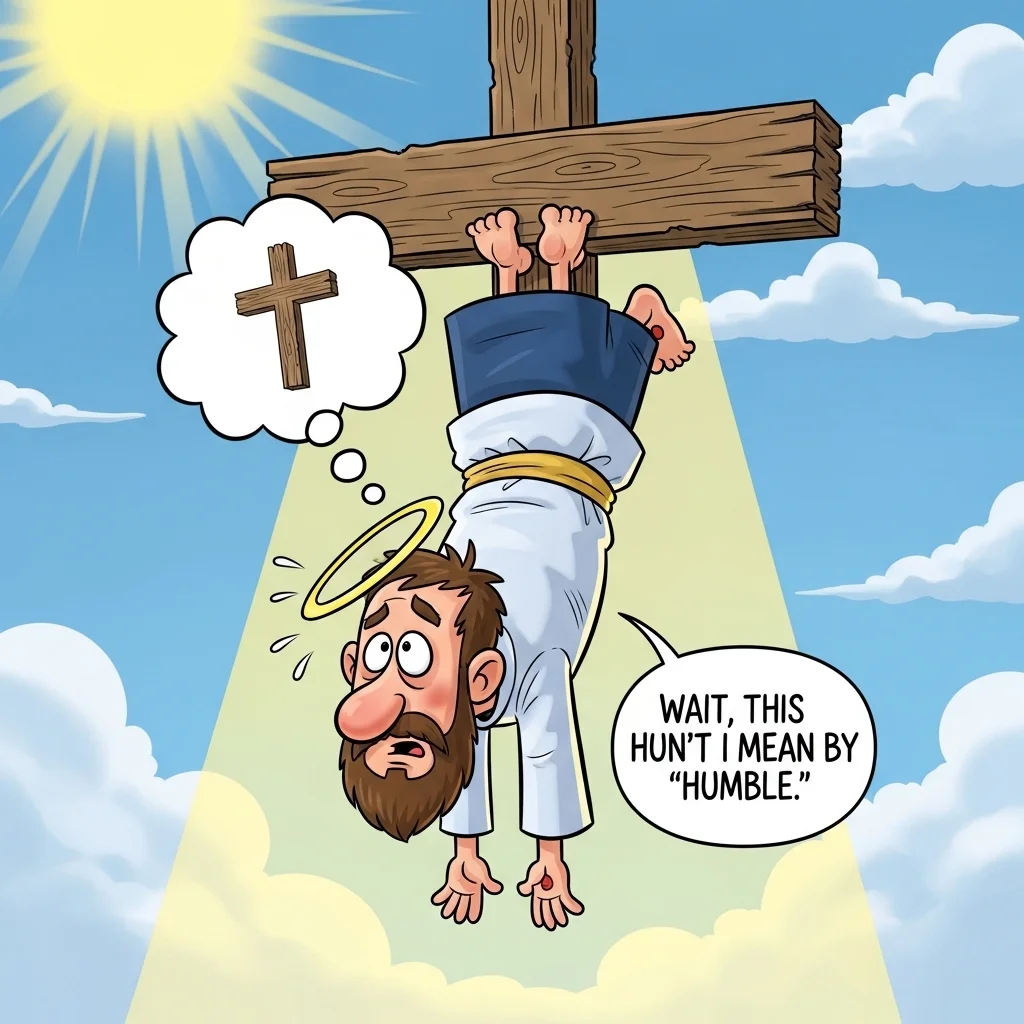
Whether an upside down cross is a bad sign depends on its context and intended meaning. From a historical Christian perspective, an upside down cross is not inherently evil. It is traditionally known as the Cross of Saint Peter, representing humility and the apostle Peter’s belief that he was unworthy to be crucified in the same manner as Jesus Christ.
However, in modern popular culture, horror movies, heavy metal imagery, and some occult or satanic groups have adopted the upside down cross as a symbol of rebellion against Christianity. Because of these modern associations, many people immediately perceive it as a negative or anti-Christian symbol.
Christians are encouraged to focus on the heart and intentions behind symbols rather than making assumptions based solely on appearance.
Relevant Bible Verses:
“Man looks on the outward appearance, but the Lord looks on the heart.” — 1 Samuel 16:7
“Test everything; hold fast what is good.” — 1 Thessalonians 5:21
What Does an Upside Down Cross Mean Spiritually?
Spiritually, an upside down cross can carry different meanings depending on the beliefs of the person using it.
Within Christian tradition, it symbolizes humility, sacrifice, and devotion to Christ because of the account that the Apostle Peter requested to be crucified upside down, believing he was not worthy to die exactly as Jesus did. Although the Bible does not record this event, early Christian tradition preserves this understanding.
Outside Christianity, the symbol may represent rebellion, rejection of religious authority, or personal individuality. In some modern spiritual movements, it is interpreted in entirely different ways that are not rooted in biblical teaching.
For Christians, true spiritual meaning comes from faith in Christ rather than from symbols themselves.
Relevant Bible Verse:
“Whoever wants to be my disciple must deny themselves and take up their cross daily and follow me.” — Luke 9:23
Upside Down Cross Satanic Meaning
Today, the upside down cross is sometimes used by satanic or anti-Christian groups as a symbol intended to mock or oppose Christianity. Movies, music, and popular culture have reinforced this association, leading many people to automatically connect the symbol with Satanism.
However, this modern use should not erase its much older Christian history. The original historical meaning predates modern satanic symbolism by many centuries.
The Bible never identifies an upside down cross as a satanic symbol. Instead, Scripture warns believers to avoid practices that deliberately oppose God and to remain faithful to Christ.
Relevant Bible Verse:
“Submit yourselves therefore to God. Resist the devil, and he will flee from you.” — James 4:7
Upside Down Cross Tattoo Meaning
An upside down cross tattoo can have different meanings depending on the person wearing it.
Some individuals choose it to honor Saint Peter and express humility before God. Others use it simply as an artistic design without attaching any religious significance. In contrast, some wear it to symbolize rebellion, nonconformity, or opposition to Christianity.
Because tattoo meanings vary widely, it is important not to assume someone’s beliefs based solely on the design.
For Christians considering religious tattoos, the greater question is whether the tattoo honors Christ and reflects one’s faith.
Relevant Bible Verse:
“So whether you eat or drink or whatever you do, do it all for the glory of God.” — 1 Corinthians 10:31
Upside Down Cross with Circle Meaning
An upside down cross enclosed within a circle does not have one universally accepted meaning. Its interpretation depends largely on the culture, artwork, or organization using it.
In some cases, the circle simply serves as a decorative design. In other settings, especially in occult or fictional imagery, it may be intended to represent concepts unrelated to Christianity. Some artistic designs combine the circle with the upside down cross without any spiritual meaning at all.
Because there is no biblical teaching about this specific symbol, Christians should avoid assigning spiritual power to it simply because of its appearance.
Relevant Bible Verse:
“Dear friends, do not believe every spirit, but test the spirits to see whether they are from God.” — 1 John 4:1
Cross of Saint Peter
The Cross of Saint Peter is the traditional name for the upside down cross within Christianity.
According to early Christian tradition, the Apostle Peter was sentenced to crucifixion in Rome. Out of humility, he requested to be crucified upside down because he believed he was not worthy to die in the same manner as Jesus Christ. Although this account is not recorded in the Bible, it has been preserved in early Christian writings and has long been recognized in Christian history.
For this reason, many churches view the upside down cross as a symbol of humility, faithful service, and self-sacrifice rather than a symbol of evil.
Relevant Bible Verse:
Jesus said to Peter, “Follow me.” — John 21:19
This passage follows Jesus’ prophecy about Peter’s future death, which Christians have historically connected with Peter’s martyrdom.
Upside Down Cross Symbol
The upside down cross is a symbol whose meaning changes according to its context.
Historically, it represents Saint Peter and Christian humility. In contemporary culture, it is often associated with horror entertainment, rebellion, or anti-Christian symbolism because of how it has been portrayed in media.
Since symbols can acquire different meanings over time, Christians should evaluate them carefully while remembering that faith is grounded in Jesus Christ rather than in symbols themselves.
Relevant Bible Verse:
“Fixing our eyes on Jesus, the pioneer and perfecter of faith.” — Hebrews 12:2
Upside Down Cross Necklace Meaning
An upside down cross necklace may express different beliefs depending on the wearer.
Some Christians wear it to honor Saint Peter and his example of humility and faithfulness. Others may wear it as a fashion accessory without religious intent. Still others may use it to communicate rebellion or anti-Christian views.
Because the same necklace can carry different meanings, Christians are encouraged to consider both their intentions and the message their actions communicate to others.
Relevant Bible Verse:
“Be careful, however, that the exercise of your rights does not become a stumbling block to the weak.” — 1 Corinthians 8:9
Ultimately, the Bible teaches that a person’s relationship with God is determined by faith in Jesus Christ rather than by the symbols they wear.
What Is the Upside Down Cross?
An upside down cross is simply a traditional Christian cross turned vertically downward.
Visually, it appears inverted. Because of modern media and cultural trends, many assume it symbolizes opposition to Christianity.
However, historically, that interpretation is incorrect.
To understand the real Upside Down Cross meaning in Bible, we must look at the life of Saint Peter.
Biblical Foundation: Saint Peter and the Inverted Cross
The Bible records the martyrdom prediction of Peter in John 21:18–19, where Jesus tells him:
“When you are old, you will stretch out your hands…”
Early Christian tradition teaches that Peter was crucified in Rome during the persecution under Emperor Nero.
According to historical accounts (outside the Bible but accepted in early church history), Peter requested to be crucified upside down because he felt unworthy to die in the same manner as Jesus.
This event is why the inverted cross became known as the “Cross of Peter.”
Although Scripture does not explicitly describe the upside down crucifixion, church tradition strongly connects it to Peter’s humility.
Therefore, the original Upside Down Cross meaning in Bible reflects:
Humility
Reverence for Christ
Self-awareness of unworthiness
Sacrificial faith
The Symbolism Behind Upside Down Cross Meaning in Bible
Let’s examine what this symbol represents spiritually.
1. Humility Before Christ
Peter denied Jesus three times. Yet he later became a bold leader of the early church.
When facing execution, he reportedly said he was not worthy to die like Christ.
The inverted cross symbolizes:
Lowering oneself before God
Recognizing Christ’s supremacy
Choosing humility over pride
In Philippians 2:3, believers are urged:
“In humility value others above yourselves.”
The Upside Down Cross meaning in Bible aligns perfectly with this teaching.
2. Transformation Through Grace
Peter’s life is a powerful case study of redemption.
| Before Resurrection | After Resurrection |
|---|---|
| Denied Jesus | Preached boldly |
| Fearful | Courageous |
| Ashamed | Faithful unto death |
The upside down cross reminds us that failure does not define the future.
It represents spiritual transformation.
3. Sacrificial Commitment
Jesus said in Luke 9:23:
“Whoever wants to be my disciple must deny themselves and take up their cross daily.”
The inverted cross visually emphasizes:
Dying to self
Total surrender
Following Christ even unto death
This is the true biblical depth of the Upside Down Cross meaning in Bible.
Cultural Shift: How the Symbol Became Misunderstood
In modern times, the upside down cross was adopted by anti-Christian groups and later associated with Satanism and occult imagery.
For example, in pop culture and horror films, it is often used to symbolize opposition to Christ.
However, this interpretation is historically recent and not rooted in biblical theology.
Even the Church of Rome displays the Cross of Peter in certain contexts as a symbol of apostolic authority and humility.
The confusion arises from cultural redefinition—not biblical origin.
Case Study: Saint Peter’s Martyrdom
Peter was executed during the reign of Emperor Nero around 64–67 AD.
According to early Christian historians, Peter was crucified in Rome. When sentenced to death, he requested to be crucified upside down out of reverence for Jesus.
This moment represents:
Courage under persecution
Loyalty despite suffering
Recognition of Christ’s unique sacrifice
While not detailed in the New Testament, this tradition shaped Christian symbolism for centuries.
Thus, the historical Upside Down Cross meaning in Bible reflects devotion—not defiance.
Psychological Angle: Why Inversion Feels Disturbing
Human psychology associates inversion with disorder.
We naturally expect:
Upright to mean stability
Downward to mean collapse
So when we see a cross upside down, our mind interprets it as reversal or rebellion.
However, in Christian symbolism, reversal often represents:
The kingdom of God turning worldly values upside down
Strength in weakness
Exaltation through humility
Jesus taught in Matthew 20:16:
“The last will be first, and the first will be last.”
The gospel itself “inverts” worldly power structures.
This adds deeper meaning to the Upside Down Cross meaning in Bible.
Spiritual Angle: What It Teaches Believers Today
1. True Greatness Comes Through Humility
Peter’s inverted cross reflects the heart posture every believer should have.
James 4:10 says:
“Humble yourselves before the Lord, and He will lift you up.”
The symbol reminds us to stay grounded.
2. Faithfulness Despite Fear
Peter once failed. Yet he later faced death with conviction.
The upside down cross speaks to believers struggling with past mistakes:
Grace rewrites the story.
3. Suffering for Christ Is Honorable
Throughout Scripture, suffering for righteousness is described as honorable.
1 Peter 4:16 says:
“If you suffer as a Christian, do not be ashamed.”
The Upside Down Cross meaning in Bible reflects that suffering for Christ is not defeat—it is devotion.
Comparison: Upright Cross vs Upside Down Cross Meaning in Bible
| Feature | Upright Cross | Upside Down Cross (Biblical Context) |
|---|---|---|
| Represents | Christ’s sacrifice | Peter’s humility |
| Focus | Redemption | Unworthiness before Christ |
| Meaning | Salvation | Devotion |
| Modern Misuse | Rare | Frequently misunderstood |
Both symbols point back to Christ when understood correctly.
Practical Advice: How Should Christians View the Symbol?
If you encounter an upside down cross, context matters.
Ask:
Is it used historically (as Peter’s cross)?
Is it displayed in a Christian theological context?
Or is it used deliberately as anti-Christian symbolism?
Understanding the authentic Upside Down Cross meaning in Bible prevents fear and confusion.
Christians should respond with:
Knowledge
Discernment
Confidence in biblical truth
Not panic.
